

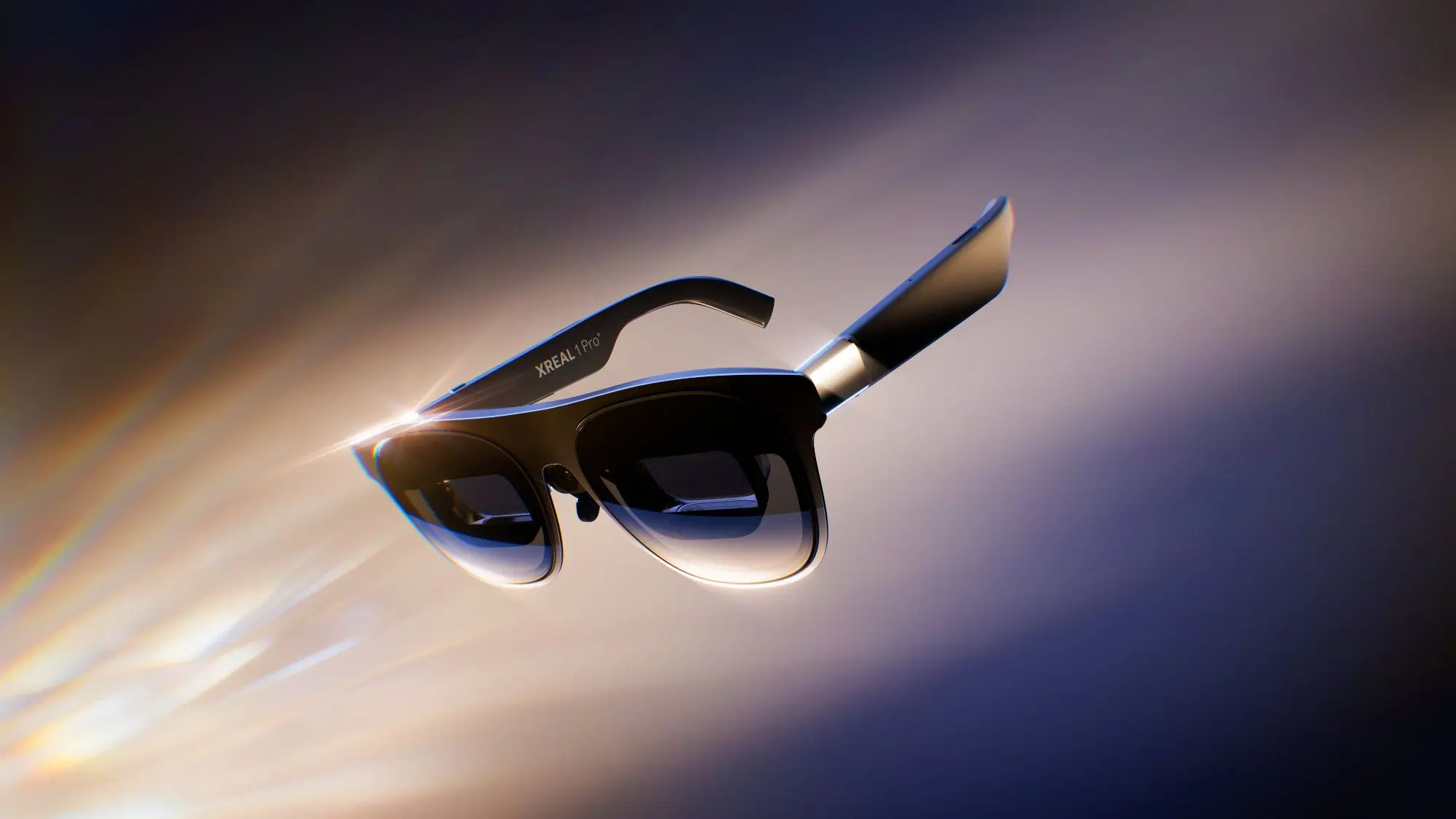
XREAL has quietly improved one of the most important specifications for any pair of augmented reality glasses: brightness. The company's best-regarded AR eyewear, the XREAL Air 2 Pro, is now capable of a brighter image, a change that makes virtual screens easier to see in daylight and adds punch to movies, games, and productivity apps. For anyone who has used early AR glasses, the difference is not cosmetic. Brightness is the single biggest factor in whether a wearable display feels usable outside a dark room.
The update matters because AR glasses are not like a phone or a monitor. They project an image into your field of view while you also see the real world. If the display is too dim, the virtual image washes out against a bright sky, a sunlit window, or even a well-lit office. If the display is bright enough, the virtual screen can hold its own against ambient light. That is why every major AR glasses maker treats nits, the standard unit of display brightness, as a headline specification.
Key Facts at a Glance
- XREAL has increased the brightness of its best-reviewed AR glasses.
- The improvement targets outdoor and bright-room visibility, a common weakness of wearable displays.
- The glasses remain lightweight, tethered via USB-C, and designed for media, gaming, and productivity.
- Brighter micro-OLED displays can improve contrast and readability without making the glasses much heavier.
- The change raises expectations for competitors in the lightweight AR glasses category.
- XREAL continues to iterate on display quality, comfort, and software compatibility.
Why Brightness Is the Make-or-Break Spec for AR Glasses
AR glasses have come a long way from the bulky, low-resolution headsets of the past decade. Modern models like the XREAL Air 2 series use micro-OLED panels that are small, power-efficient, and capable of vivid color. They project a large virtual screen that appears to float a few meters away. But the physics of see-through optics are unforgiving. A portion of the display's light is lost as it travels through the optical combiner, and the human eye must reconcile the virtual image with whatever real-world light is competing for attention.
When brightness is low, users often resort to snap-on shades or dark environments. That limits where AR glasses can be used. A train commute, a flight, a coffee shop with big windows, or a backyard patio all become difficult. Increasing brightness expands the number of places where the glasses are practical. It also improves the perceived contrast of text and video, because the display can overcome more ambient light. In effect, a brightness boost is not just about a brighter picture. It is about freedom of use.
XREAL's approach has been to pair brightness with electrochromic dimming. On the Air 2 Pro, the lenses can darken electronically in three levels. That lets wearers block out more of the real world when they want maximum immersion. The combination of higher brightness and adjustable dimming is particularly effective. Users can keep the lenses clear for awareness while still reading a bright virtual screen, or they can dim the lenses for a more cinema-like experience. The latest brightness improvement makes both modes more capable.
What the Brighter Display Means in Practice
For media consumption, a brighter display makes movies and shows look more vibrant. HDR content benefits because highlights can stand out against darker scenes. Colors appear richer, and dark scenes retain more detail when ambient light is not washing them out. For gaming, a brighter panel can make fast-moving objects easier to track, and it can reduce the ghosting or smearing that becomes more visible when the image is dim. For productivity, brightness is even more critical. Text needs sharp contrast to be readable. A virtual monitor that looks gray and washed out is exhausting to use, but a bright one can feel closer to a real OLED screen.
The XREAL Air 2 Pro already offers a 1080p resolution per eye, a 120Hz refresh rate, and a wide field of view that makes a virtual screen feel large. Those specifications matter, but they only reach their potential when the display is bright enough. A high-resolution image that is too dim is still hard to see. A slightly lower-resolution image that is bright and contrasty can be more usable. XREAL's update recognizes that hierarchy. It also shows that the company is listening to feedback from reviewers and users who have asked for better outdoor performance.
The Competitive Landscape
XREAL is not alone in the AR glasses market. Competitors like Viture, Rokid, and Even Realities have released lightweight display glasses with similar form factors. Larger technology companies are also exploring the space. Meta has shown prototype AR glasses, and Apple's Vision Pro has demonstrated what high-end mixed reality can do, albeit at a much higher price and weight. The difference is that XREAL's glasses are designed to be worn like ordinary eyewear. They do not fully occlude the world, and they do not require a heavy battery pack on the head. Instead, they connect to a phone, a handheld gaming console, a laptop, or a dedicated accessory for power and video.
That tethered design has trade-offs. It means the glasses themselves can stay light, but it also means users need a compatible device. XREAL has worked to broaden compatibility across Android phones, iPhones with adapters, Steam Deck, Nintendo Switch, and computers. The brightness improvement strengthens the value proposition for all those use cases. A brighter display is especially important for Steam Deck and Switch users, who often play in varied lighting conditions. It also helps remote workers who want a private, large screen without carrying a portable monitor.
Technical Hurdles Behind a Brighter Image
Increasing brightness in AR glasses is not as simple as turning up a dial. Micro-OLED panels can produce high brightness, but doing so increases power consumption and heat. In a device that sits on your face, both are serious concerns. XREAL must balance brightness against battery life, thermal comfort, and long-term reliability. The company has likely tuned the display to deliver more light without making the glasses uncomfortably warm or draining a connected device too quickly. The exact engineering method may involve a new firmware profile, improved optical efficiency, or a combination of hardware and software changes.
\
Source:Windows Central News