

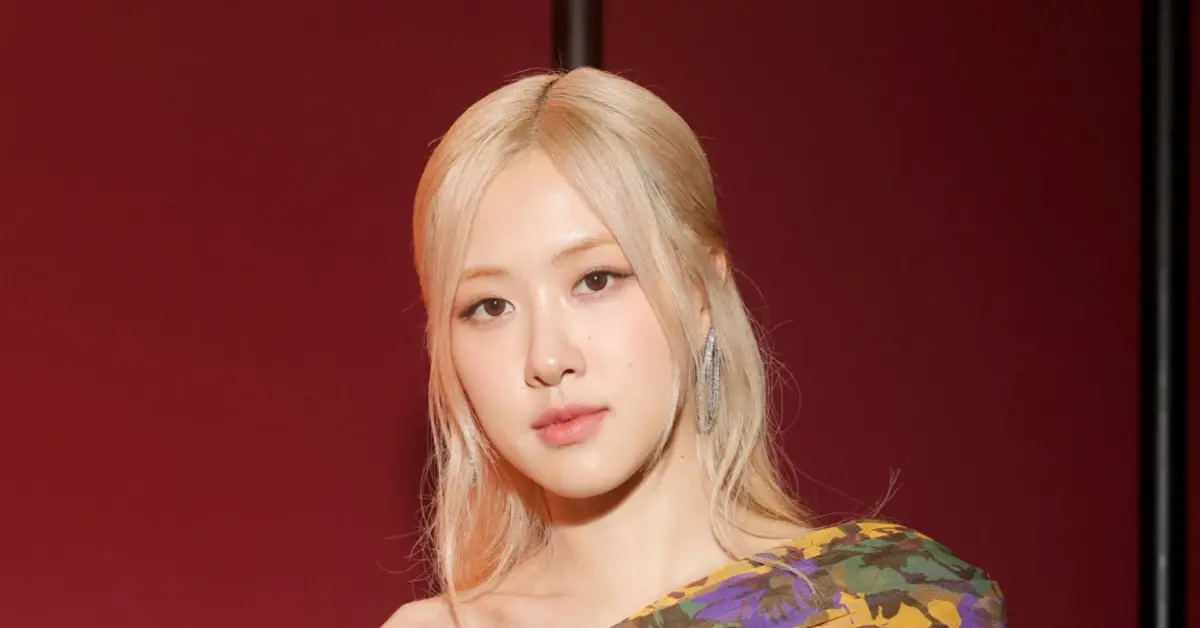
Rosé has credited Bruno Mars with helping her trust her songwriting intuition, saying the pop star has given her a new sense of confidence in the studio. The Blackpink singer, whose real name is Roseanne Park, has often questioned her own creative instincts and felt pressure to meet outside expectations. In a recent interview, she explained that Mars helped her understand that creative decisions can be guided by instinct and timing, not just targets and outside opinions.
She said: 'Bruno showed me that, as a creative, you have to listen to your intuition and your timing, and you're allowed to trust in it. I've become more confident in what feels right to me and in doing whatever it takes to have that come to life.' The comment captures a shift for an artist who has spent years working within the highly structured K-pop system and is now stepping further into solo work.
A collaboration built on instinct
Rosé and Mars, 39, are riding high on the success of their song 'APT.', a track that became one of the most talked-about pop collaborations of the year. The song spent 18 weeks at No. 2 on the UK charts following its October release and later sat comfortably at No. 12. The collaboration between the 'Locked Out of Heaven' singer and the K-pop star arose after Rosé told her label she was a huge fan of Mars' work. The label arranged for them to meet, and the pair hit it off immediately because of his intuition.
Rosé said: 'When I met him, I felt like he read through me, and I was like, Oh my God, I feel scared.' The remark suggests that the connection was not simply a matter of professional convenience. Mars' reputation as a songwriter, producer and performer is built on an ear for hooks, groove and emotional directness, and Rosé appears to have found something in his approach that unlocked a more trusting version of her own creative process.
Why intuition matters in songwriting
For many artists, songwriting is not a neat, linear process. It involves making dozens of small decisions about melody, phrasing, structure, tone and timing. In pop music, those decisions are often shaped by chart expectations, label feedback, fan anticipation and the pressure to follow trends. Rosé has spoken candidly about doubting her creativity and experiencing pressure to meet certain goals, which makes Mars' advice about intuition particularly significant.
Trusting intuition does not mean ignoring craft. It means recognising that a song can reveal what it needs if the writer is willing to listen. A vocal take may feel right before it looks technically perfect. A lyric may connect because it sounds honest rather than because it follows a formula. A production choice may work because it creates the right emotional atmosphere, even if it is not the most obvious option. Rosé's comments point to that kind of creative confidence: the willingness to follow a feeling and then do whatever it takes to bring it to life.
That lesson is especially relevant for an artist moving between group and solo work. In Blackpink, Rosé performs as part of a globally successful four-member group with a distinct identity, a dedicated fandom and a highly polished presentation. As a solo artist, she has to make more decisions alone, from vocal arrangements to visual concepts to the overall tone of a record. Having a collaborator who encourages her to trust her own timing can be liberating, but it can also be demanding, because it places more responsibility on the artist's own judgement.
Rosé's solo chapter and Blackpink's break
Rosé and her fellow Blackpink members have taken a year off group work to pursue their own projects. Rosé released her debut solo LP, 'rosie', on 6 December. The album marked a major step in her solo career and gave her a larger canvas for the kind of personal songwriting that had previously appeared in smaller doses. Her first solo single, 'On the Ground', had already shown that she could step outside the group format, but a full-length project allowed her to explore a wider range of moods and stories.
The solo album also highlighted how closely Rosé's creative process can overlap with her relationships in the industry. Mars has a songwriting credit on the album's first track, 'number one girl'. Rosé called him for advice on the tune, which she said she was 'really struggling with'. She explained: 'He came to L.A. and helped me complete the song. I'm really grateful.' That anecdote adds detail to the picture of their partnership. It was not limited to a single hit single; it extended into the making of her solo record, where Mars served as a trusted sounding board.
Rosé also hinted at an unreleased song inspired by Mars' music. She said: 'I wrote it around the time when I had Bruno Mars's whole discography on repeat as I drove to the studio and back.' The detail is small but revealing. It shows how deeply an artist's listening habits can feed into their writing, and how a collaborator's catalogue can become part of the atmosphere in which new songs take shape. For Rosé, Mars' music appears to have functioned as both inspiration and reassurance.
The pressure and promise of a solo career
Rosé's reflections arrive at a moment when K-pop solo careers are increasingly central to the global pop landscape. Blackpink debuted in 2016 and quickly became one of the most prominent girl groups in the world, with members Jisoo, Jennie, Lisa and Rosé each developing distinct public identities. The group's decision to pause group activity for a year gave each member room to pursue individual projects, and those projects have become important tests of their artistic range and commercial power.
For Rosé, the challenge is not simply visibility. She is already one of the most recognisable voices in K-pop, known for her distinctive tone and emotional delivery. The harder task is creative ownership: deciding what her solo music should sound like, how much of her personal experience to reveal, and how to balance the expectations of Blackpink fans with the desires of a new audience. Mars' encouragement to trust her intuition speaks directly to that challenge.
The success of 'APT.' also changes the conversation around her solo work. A hit collaboration can open doors, raise expectations and introduce an artist to listeners who might not otherwise encounter her music. It can also create pressure to repeat the formula. Rosé's comments suggest that she is more interested in protecting her instincts than in chasing a single sound. The fact that she continued to call Mars for help on 'number one girl' indicates that their creative relationship is based on trust rather than a one-off marketing pairing.
What Mars brings to a collaboration
Mars is known for his meticulous approach to pop songcraft, blending elements of R&B, funk, soul and rock into records that feel both familiar and carefully constructed. His catalogue includes hits such as 'Locked Out of Heaven', 'Just the Way You Are', 'Uptown Funk' and 'That's What I Like', and his work as a collaborator has often brought out new colours in other artists. For Rosé, his value may lie less in a specific genre or production style than in his confidence as a creative decision-maker.
That confidence can be contagious. When a songwriter is stuck, a collaborator who trusts their own ear can help break the logjam. Mars' willingness to travel to Los Angeles to help complete 'number one girl' suggests a hands-on commitment to the song rather than a distant credit. Rosé's gratitude is understandable: completion is often the hardest part of songwriting, especially when self-doubt has crept in.
Blackpink's Wembley dates and the road ahead
Rosé's solo activity is unfolding alongside Blackpink's continued presence as a live act. She will play London at Wembley Stadium with Blackpink on 15 August, and a second date has been added the next night due to sweeping demand. The stadium shows underline the scale of the group's following and the continued appetite for Blackpink performances, even as members pursue individual projects.
The balance between group and solo work is a defining feature of modern pop stardom. It allows artists to explore different sides of their identity while maintaining the collective brand that made them famous. For Rosé, that balance appears to be part of a broader search for creative freedom. Her solo album, her collaboration with Mars and her reflections on intuition all point to an artist who is trying to make decisions from a more self-assured place.
She said that if she could give advice to her younger self now, she would tell her: 'Stop questioning yourself. Stop wasting time. Do what you really think — and if that's wrong, then change it.' The line is direct, but it also captures the ongoing nature of creative confidence. Trusting intuition is not a one-time fix. It is a practice, built through collaborations, mistakes, revisions and the willingness to keep going.
Source:Contactmusic.com News