

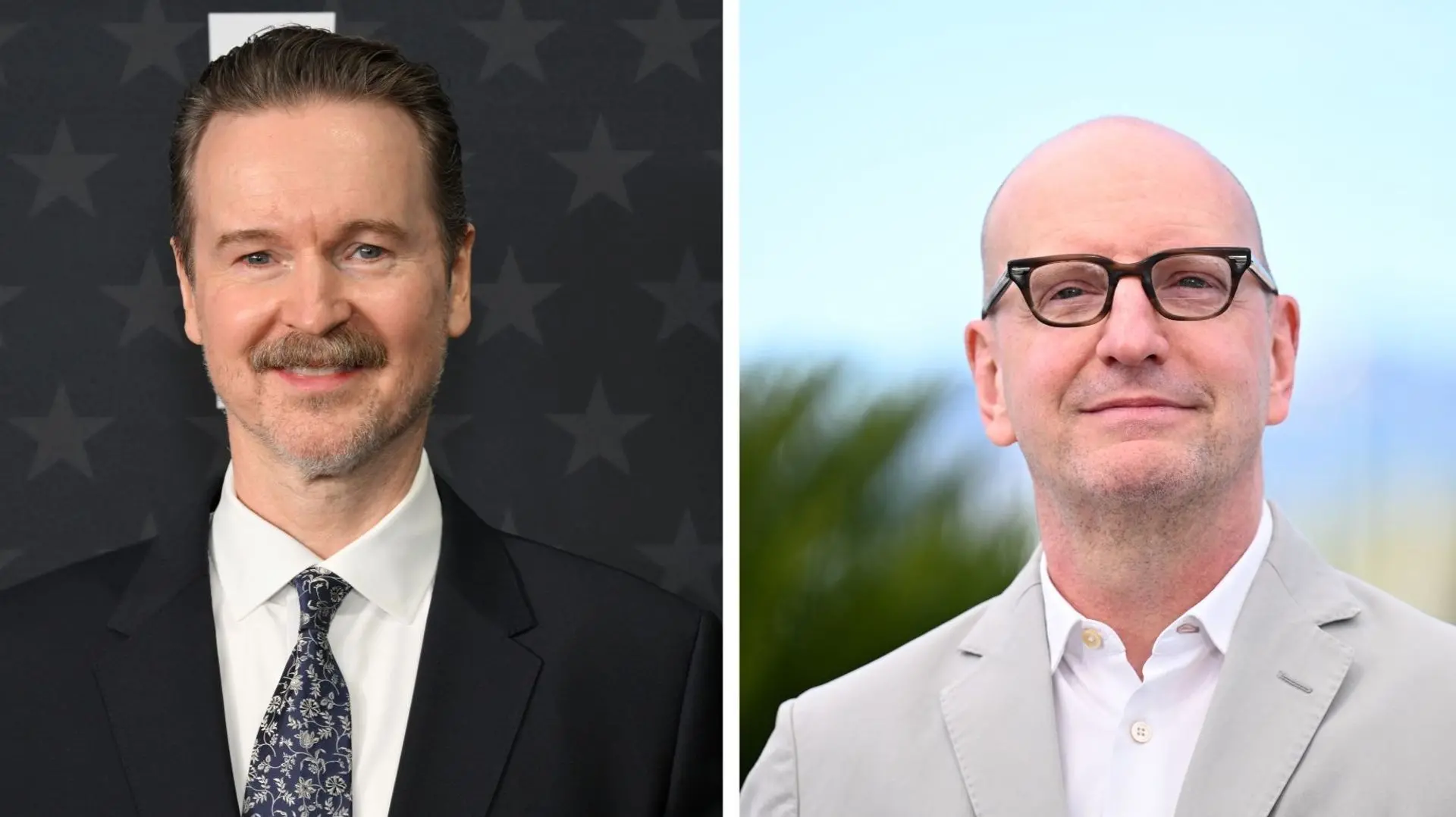
Production on Batman 2 has entered an unexpected new phase, with Matt Reeves temporarily stepping back from day-to-day directing duties while Steven Soderbergh helps guide the shoot to completion. The change was confirmed after filming was already underway, and it immediately raised questions about the sequel's creative leadership, schedule, and long-term future. The official account is clear: Reeves is not leaving the project. Instead, the two filmmakers have established a close collaboration intended to keep production moving without abandoning the vision already set in motion.
The news centers on one of the most closely watched comic-book sequels in development. Reeves' first Batman film, released in 2022, introduced Robert Pattinson as a younger, more introspective Bruce Wayne, paired with a rain-soaked Gotham City and a detective-driven story. The film was both a critical and commercial success, grossing more than $770 million worldwide and spawning the HBO series The Penguin, which starred Colin Farrell. A sequel was inevitable, but the road to Batman 2 has been long, marked by scheduling shifts and the sheer complexity of mounting a large-scale production.
A Temporary Step Back, Not a Departure
According to the announcement, Reeves recently decided to put the film aside temporarily for personal reasons. That decision came after shooting had already begun, making the timing delicate. A blockbuster of this size employs hundreds of people, operates on a tightly coordinated schedule, and depends on daily decisions from the director. Stepping away, even temporarily, is not a simple matter. It requires a trusted collaborator who can keep the production moving while preserving the creative direction already established.
That collaborator is Soderbergh, a filmmaker whose career has been defined by versatility, speed, and a willingness to experiment. He is not taking over the project in the sense of replacing Reeves as its author. Instead, he is helping to finish principal photography while Reeves remains involved. The two men have stayed in close contact, and Reeves has publicly expressed gratitude for the assistance. In a tweet, Reeves sought to shut down speculation that he was exiting the film: 'To be clear, I am not leaving Batman 2. I am deeply grateful to Steven for helping me during this difficult period, to finish principal photography.'
The wording matters. In Hollywood, a director stepping away from a production can signal creative turmoil, studio interference, or a complete change in direction. Here, the official framing is collaboration. Reeves remains the name attached to the project, the architect of its story and visual language, while Soderbergh provides practical support on set. That distinction will be important for fans, for the cast and crew, and for the studio as it manages expectations around a film that has been anticipated for years.
Soderbergh's Role: Stabilizing a Massive Production
Soderbergh is an unusual but strangely logical choice for this assignment. He is not a director known for franchise filmmaking, and he has never been a studio blockbuster specialist in the conventional sense. Yet he is one of the most experienced and resourceful filmmakers working today. He broke through with Sex, Lies, and Videotape in 1989, won an Academy Award for directing Traffic, and has moved fluidly between glossy ensemble entertainments such as Ocean's Eleven, stripped-down experiments, and politically engaged dramas. His filmography includes Erin Brockovich, Magic Mike, Contagion, Logan Lucky, No Sudden Move, Kimi, and Presence.
That range is relevant. Soderbergh has built a reputation for working quickly, solving problems on set, and adapting to changing circumstances. He has often served as his own cinematographer and editor, and he has experimented with different production models, release strategies, and technologies. On a massive film like Batman 2, those skills can be invaluable. The job is not to reinvent the movie or impose a new style. It is to keep the machine running, maintain continuity, and help the cast and crew reach the finish line.
Warner Bros. and DC Studios confirmed the arrangement in a statement, describing Soderbergh as a strong directorial reinforcement. The studios said the goal is to finish the film on schedule and protect its planned February 2028 release date, six years after the first film. They also emphasized that Reeves remains the name attached to the project. That dual message is designed to reassure both the industry and the fan base: the film is still Reeves' film, but it now has an additional pair of experienced hands to help it cross the line.
Why the February 2028 Date Matters
Release dates are never just dates. For a franchise film, they are markers of corporate strategy, marketing planning, and competitive positioning. Batman 2 has already been through a long development process, and the February 2028 slot gives the studio a clear target. Moving that date would create a ripple effect across production, promotion, merchandising, and the broader DC slate. Keeping the date is therefore about more than finishing a movie. It is about maintaining confidence in a major asset.
The six-year gap between the first film and the sequel is notable. In the current era of comic-book cinema, franchises often try to turn around sequels more quickly, sometimes within two or three years. A longer gap can build anticipation, but it also creates risk. Audience tastes shift, competing franchises evolve, and the cast becomes more expensive and more in demand. The first film's success was strong enough to justify patience, but the sequel now has to justify the wait. The studio's decision to bring in Soderbergh suggests it wants to protect both the schedule and the quality of the finished product.
The comparison to other troubled or delayed productions is inevitable, but the official language here avoids the usual signals of crisis. There is no mention of a replacement director, no suggestion of a creative overhaul, and no indication that the script or cast is changing. The emphasis is on continuity. Soderbergh is helping Reeves, not supplanting him. The studios are reinforcing the release plan, not abandoning it. That may seem like public-relations framing, but in the high-stakes world of franchise filmmaking, framing is part of the business.
A Cast Built for Star Power and Prestige
The film's cast is another reason the production attracts so much attention. Robert Pattinson returns as Bruce Wayne, a role that allowed him to move from the Twilight phenomenon into a more unpredictable career. Since then, he has worked with directors such as Christopher Nolan, the Safdie brothers, Robert Eggers, and Bong Joon Ho, building a reputation for choosing ambitious projects. His performance in The Batman was central to the film's identity, and the sequel will depend on him to carry the character's emotional weight.
Pattinson is joined by Scarlett Johansson, Colin Farrell, and Sebastian Stan, according to the report. Johansson brings decades of experience in both independent cinema and global franchises, from Lost in Translation and Marriage Story to Black Widow. Farrell, who played the Penguin in The Batman and led the acclaimed spin-off series The Penguin, is one of the most versatile actors of his generation, with credits including In Bruges, The Lobster, and The Banshees of Inisherin. Stan has moved between Marvel projects such as Captain America: The Winter Soldier and prestige dramas such as Pam & Tommy, The Apprentice, and A Different Man.
That combination of stars suggests a film that wants to balance spectacle with performance. Reeves' first Batman film was praised for its atmosphere, its detective-story structure, and its committed cast. The sequel will need to expand that world while avoiding the trap of simply repeating what worked before. The addition of actors like Johansson and Stan, alongside returning performers, gives the production new angles to explore. Their exact roles remain under wraps, but their involvement raises the stakes and broadens the film's appeal.
The Long Road From The Batman to Batman 2
The first film arrived in March 2022 after its own delays, including a pandemic-era shutdown. It was a major test for Warner Bros.' handling of the Batman character, and it succeeded by offering something distinct from the earlier Dark Knight trilogy and the DCEU's version of the character. Reeves leaned into noir, horror, and detective fiction, presenting a Gotham that felt corrupt, rain-drenched, and psychologically unsettled. The film also launched a wider Reeves-led Batman universe, including The Penguin, which became a critical and popular success.
That success created high expectations for the sequel. Fans have spent years speculating about which villains would appear, how the story would continue, and whether the film would build on the first movie's ending. The production has faced the usual challenges of a large franchise: script development, casting, scheduling, and the need to coordinate with other DC projects. The decision to bring in Soderbergh is the latest chapter in that long process, and it shows that the film is far enough along to require a hands-on solution rather than a reset.
Principal photography is now continuing, and Pattinson has spoken about how demanding the shoot can be. That is not unusual for a Batman film, which often involves night shoots, elaborate sets, practical effects, and physically demanding action. The difference here is that the production is continuing under a dual leadership arrangement. Reeves remains the creative anchor, while Soderbergh helps manage the daily realities of filming. For the cast and crew, that stability is likely welcome.
What the Collaboration Says About Modern Blockbuster Filmmaking
The arrangement also reflects a broader truth about modern blockbusters. They are enormous logistical enterprises, and directors increasingly rely on trusted collaborators, second-unit teams, and specialized crews to bring them in on time. A director's role is not only to stage scenes but to manage a vast network of departments, schedules, and studio expectations. When a director needs to step back temporarily, the solution is often to bring in someone with the experience to keep the production moving without losing the thread.
Soderbergh fits that need because he is both a respected artist and a practical filmmaker. He has worked with major stars, managed ensemble casts, and delivered films on modest budgets and tight schedules. He is also known for his curiosity about technology and process, which could help a production grappling with the demands of visual effects, physically demanding action, and the need for continuity. His involvement does not guarantee that the film will be good, but it does suggest that the studio is serious about finishing it properly.
For Reeves, the collaboration may also offer a way to protect his health and personal life while keeping his creative commitments intact. Hollywood has become more open about the pressure placed on directors
Source:RTBF News