

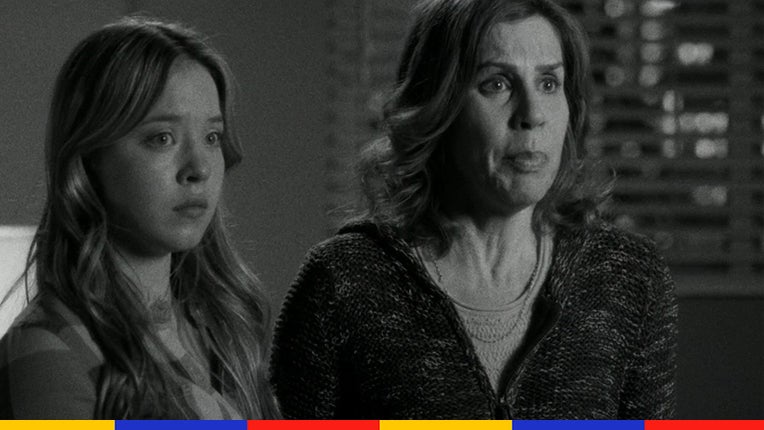
Long before she became one of the most discussed young actors of her generation, Sydney Sweeney passed through the corridors of Grey Sloan Memorial Hospital. The future Euphoria star had a tiny, almost blink-and-miss-it role in Grey's Anatomy, the long-running medical drama that has launched or extended countless television careers. In 2014, when Sweeney was about 17 and still building her resume, she appeared early in season 11 in the episode titled Don't Let's Start. She played Erin, the daughter of a patient whose sudden and severe illness becomes the episode's emotional core. The part did not give her any dialogue, but it placed her inside one of television's most watched ensembles and added a valuable credit to a career that was only beginning to take shape.
Key Facts at a Glance
- Sydney Sweeney appeared in Grey's Anatomy in 2014, early in season 11.
- She played Erin, the daughter of patient Jeremy Weaver.
- The episode was titled Don't Let's Start.
- Erin had no lines of dialogue and appeared mainly in the episode's final family scene.
- Her character was identified as a strong volleyball player, a detail that echoed Sweeney's own athletic background.
- The appearance came before her breakout roles in The Handmaid's Tale, Sharp Objects, Euphoria, and The White Lotus.
From Spokane to Hollywood
Sydney Bernice Sweeney was born in Spokane, Washington, the largest city in the state, to a mother who worked as a lawyer and a father who worked as a doctor. She was athletic from an early age and excelled in several sports, including soccer, baseball, wakeboarding, and alpine skiing. For a time, she imagined a future as a professional athlete rather than an actor. That ambition shifted in 2009, when she took part in a local shoot as an extra and discovered a passion for performance. The experience was modest, but it pointed her toward a different kind of discipline and a different kind of audience.
A year later, Sweeney began booking commercial work in Seattle and Portland, and her family eventually decided to move to Los Angeles to support her acting ambitions. By 2010, she was already making small appearances on television, including credits in established series such as Criminal Minds, 90210 Beverly Hills: New Generation, and Heroes. These were not star-making parts, but they gave her set experience, audition practice, and a growing understanding of how television production works. They also established a pattern that would continue for several years: Sweeney learned her craft through brief but varied roles before a larger breakthrough arrived.
A Medical Crisis and a Silent Goodbye
In the season 11 episode Don't Let's Start, the medical story begins when Dr. Maggie Pierce receives a patient in the emergency department who complains of intense heartburn. After examining him, Maggie suspects that the pain may be caused by a heart attack linked to an aortic dissection, a tear in the body's largest artery. She hands the patient, Jeremy Weaver, over to Dr. Miranda Bailey, who starts a series of tests to understand what is causing the dissecting aneurysm. Jeremy, however, is impatient. He wants to leave the hospital, return to work, and provide for his family, so he pushes for the quickest possible path to treatment.
Bailey agrees to perform an upper gastrointestinal endoscopy and a stomach biopsy to speed up the testing. The results are shocking: doctors find a large malignant tumor, an adenocarcinoma, in his stomach. They also determine that a drastic diet had caused significant gastric fluids to build up, turning his esophagus into a perfect environment for cancer cells to multiply. Jeremy's life is now in immediate danger, and Bailey decides to perform an emergency esophagectomy to remove the tumor. The operation goes badly, and the patient suffers a cardiac arrest. Miranda's team cannot revive him, and Jeremy dies. At the end of the episode, viewers meet his family, including his wife Ellen and his daughter Erin, played by Sweeney. The two are devastated by his death.
Erin does not have a single line of dialogue in the episode. Her presence is brief and largely silent, but it serves a clear emotional purpose. She is part of the family left behind after a medical crisis that moved too quickly for anyone to control. The script also gives her a small character detail: Erin is described as an excellent volleyball player. That touch is easy to overlook, but it connects the young character to Sweeney's own athletic adolescence. It also shows how even a minor role can be built from a few specific traits, giving an actor something physical and personal to play even when there are no speeches to deliver.
A Small Credit in a Long Career
The Grey's Anatomy appearance is a useful reminder that early television credits are often smaller and stranger than they look in hindsight. A long-running network drama needs dozens of guest actors every season, and many of them pass through without becoming major characters. Sweeney's role was not designed to launch a franchise or introduce a future lead. It was a single-episode part in a large ensemble, and it required her to sit inside grief rather than drive the story forward. Yet that kind of experience can be valuable. It teaches a young actor how to hit marks, take direction, respond to emotional stakes, and hold a scene without relying on dialogue.
Grey's Anatomy has a long history of hosting actors before or between larger breakthroughs. Its hospital setting creates a steady supply of patients, relatives, and medical staff, which means guest roles can be intense, compact, and emotionally direct. For a performer, the show offers a crash course in television rhythm. Sweeney's appearance came at a point when she was still accumulating credits, and it sits alongside other early parts that helped her build a professional foundation. The role may be tiny, but it belongs to the same period in which she was learning how to move from commercial work and small guest spots toward more substantial characters.
From Guest Spot to Breakout
Sweeney's career began to accelerate in 2018, when she appeared in three notable projects in the same year. She played Emaline in the comedy Everything Sucks!, Eden Spencer in the dystopian drama The Handmaid's Tale, and Alice in the miniseries Sharp Objects. Each role was different in tone and scale, and together they showed that she could move between comedy, prestige drama, and psychological mystery. The following year, she took on the role of Cassie Howard in Euphoria, the character that would make her far more visible to a global audience. Cassie is a divisive figure among fans, but she became increasingly central in the show's second season, giving Sweeney a platform for raw and complicated emotional work.
In 2021, Sweeney was also noticed for her performance in the satirical series The White Lotus, where she played another character shaped by privilege, insecurity, and social performance. The role reinforced her range and helped establish her as an actor who could move between teen drama, dark comedy, and ensemble satire. Awards attention followed, including Emmy nominations for her work in Euphoria and The White Lotus. By then, the silent Grey's Anatomy appearance had become a distant footnote, but it remained part of the long chain of small jobs that led to larger opportunities.
Why Early Roles Matter
The contrast between Erin and Cassie is stark. Erin is a grieving daughter with no dialogue, defined mostly by a few minutes of family tragedy and a mention of volleyball. Cassie is a fully developed character with a complicated inner life, a public arc, and a great deal of dialogue and conflict. The distance between those two roles shows how quickly a career can change when timing, casting, and performance align. It also shows that a minor credit is not necessarily a dead end. For young actors, visibility matters, but so does the accumulation of experience. A single episode of a long-running drama can be a stepping stone even when it seems forgettable on the page.
For viewers revisiting the episode, Erin is a small but precise marker of the path that followed. She appears at the end of a medical tragedy, silent and devastated, while the show's attention remains on the doctors and the family's sudden loss. Years later, that brief appearance reads differently because the actor in the background became a major screen presence. It is the kind of early role that rewards a second look: not because it is large, but because it captures a performer at the beginning of a much longer story. Sweeney's later slate has included a return to Euphoria, a teen series developed with Halsey, and the crime film National Anthem opposite Eric Dane and Halsey, continuing a career that once included a quiet, wordless turn in a hospital hallway.
Source:Konbini - Musique, cinéma, sport, food, news : le meilleur de la pop culture News