

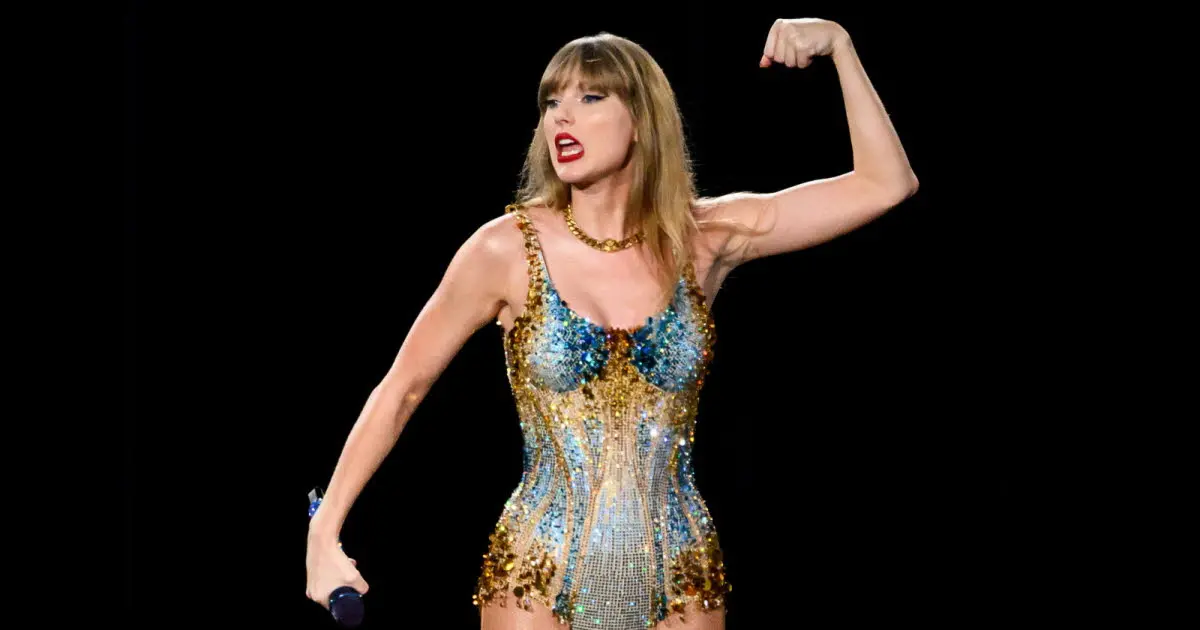
Taylor Swift is scheduled to arrive in France on May 9 for a four-night stand at Paris La Défense Arena, bringing the Eras Tour to a country where her popularity has grown far beyond pop fandom. The tour, already reported as the highest-grossing concert tour on record, is both a musical retrospective and a global economic event. A recent biography describes Swift as a rebel who became an icon, and the phrase captures the central tension of her career: a songwriter raised inside Nashville's commercial system who repeatedly challenged the rules of that system. The French dates are part of a broader European leg that has turned stadiums into pilgrimage sites, with fans trading bracelets, planning outfits by album era, and traveling across borders for tickets. But Swift's significance is no longer only musical. Since 2018, she has become a political figure, using her platform to endorse candidates, encourage voter registration, and speak about artists' rights. The Eras Tour arrives in France as a cultural spectacle and as a reminder that Swift's influence now extends into business, politics, and public life.
Key facts at a glance
- Taylor Swift brings the Eras Tour to France from May 9, with multiple dates at Paris La Défense Arena.
- The Eras Tour is reported to be the most lucrative concert tour ever staged.
- A new biography frames Swift as a rebel who became a global icon.
- Swift has challenged music-industry conventions since her teens, including label demands and low streaming payouts.
- She has been a political figure since 2018, when she made her first major endorsements and urged fans to vote.
- Her childhood determination included weekly vocal lessons in New York, Broadway auditions, children's musical theater, and a family move to Nashville.
A tour that turned pop stardom into a global event
The Eras Tour is structured as a journey through Swift's albums, moving from the country-pop of her early years to the synth-pop of 1989, the darker textures of reputation, the indie-folk turn of folklore and evermore, and the polished introspection of Midnights. Each section has its own visual language, costume changes, and fan rituals. The show runs for more than three hours and has become known for its physical demands, its theatrical staging, and its unusually deep connection with audiences. In France, the Paris dates are expected to draw not only local fans but also listeners from Belgium, Switzerland, Italy, Spain, and beyond. Hotels, transport networks, and secondary ticketing markets have adapted to the scale of the events. The economic footprint of the tour has been compared to that of major sporting events, with cities reporting surges in hospitality spending, public transport use, and merchandise sales. The Eras Tour is therefore more than a concert residency. It is a cultural machine that converts nostalgia, fandom, and songcraft into a shared public experience.
The rebel who learned to say no
The biography's central argument is that Swift's rebellion has rarely taken the form of public confrontation for its own sake. It has instead been expressed through a series of strategic refusals. As a teenager newly signed to a label, she resisted pressure to record an album made up of songs written by other people. She wanted to write her own material, and she was willing to leave a label that imposed conditions she considered unacceptable. That decision helped establish the defining feature of her career: authorship. Later, she became one of the most prominent critics of low streaming payouts, arguing that platforms were undervaluing the work of artists. Her dispute over the ownership of her master recordings turned that argument into a public campaign. Rather than accept the sale of her catalogue without her consent, she began re-recording her albums, inviting fans to listen to the new versions and turning the phrase Taylor's Version into a statement about control. The strategy was commercially successful, but it was also symbolic. It showed that an artist with a large enough audience could challenge the balance of power in the music industry.
From childhood ambition to Nashville
Swift's determination was visible long before she became a global star. As a child, she took weekly vocal lessons in New York, auditioned for Broadway productions, and joined children's musical theater groups. She was not simply interested in performing; she was organized about it. She learned to play guitar, began writing songs, and persuaded her family to move to Nashville so she could pursue a career in country music. That move has become part of her origin story, but it also reveals the seriousness of her ambition. Nashville was not a casual destination. It was the center of a genre with its own gatekeepers, publishing conventions, and radio system. Swift entered that world as an outsider and learned how to work within it while preserving her own voice. Her early success in country music gave her a platform, and her later transition into pop demonstrated that she could reshape her sound without losing the narrative control that had made her recognizable.
The political turn since 2018
Swift's political emergence is usually dated to 2018, when she broke a long period of public silence on electoral politics. She endorsed Democratic candidates in Tennessee and criticized a Republican Senate candidate whose record she opposed. The intervention was notable because Swift had previously avoided explicit partisan statements, and because her fan base was large enough to make the endorsement a national news story. In the years that followed, she became more consistent. She endorsed Joe Biden and Kamala Harris in 2020, spoke in favor of LGBTQ rights, criticized legislation she viewed as discriminatory, and encouraged her fans to register and vote. Her social media posts have repeatedly been followed by spikes in voter-registration activity, a pattern that has made her one of the most closely watched celebrity political actors in the United States. The political significance does not depend on whether every fan agrees with her. It depends on the fact that she is willing to use a platform built on music to address issues beyond music.
Why creative control became a business model
Swift's insistence on control has had consequences beyond her own catalogue. It has changed expectations among younger artists about what a contract should include and what ownership should mean. Her re-recording project demonstrated that old recordings are not simply archival objects; they are assets that can be revalued through new versions, new packaging, and new audience attention. The dispute over her masters also exposed how opaque the financial architecture of the music industry can be, especially for artists who sign early in their careers. Swift's response was not to withdraw from the commercial system but to operate within it more strategically. She built a direct relationship with her audience, used her public platform to explain the stakes, and turned a legal and financial conflict into a narrative about fairness. That combination of business discipline and storytelling has become a model for artists seeking greater independence.
The Eras Tour as a cultural archive
The Eras Tour works because it treats Swift's career as an archive rather than a greatest-hits set. Each era is revisited with enough specificity to satisfy longtime fans and enough energy to introduce the songs to newer listeners. The show acknowledges that Swift's catalogue has changed genres, public personas, and production styles, but it also insists on continuity. The same songwriter who wrote about teenage heartbreak in her early country records is present in the more experimental pop and folk of her later work. The tour makes that continuity visible. It also creates a space for fan interpretation. Fans arrive dressed as references to specific albums, songs, and music videos. They exchange handmade bracelets. They sing lyrics with an intensity that turns the arena into a collective chorus. The result is a performance that feels both highly produced and unusually participatory. The audience is not passive. It is part of the show's meaning.
France, Europe, and the next stage of influence
For France, the May dates are a test of how far Swift's cultural reach extends beyond the English-speaking world. Her lyrics are densely verbal, and their appeal depends on storytelling as much as melody. Yet her European audience has grown steadily, and the Eras Tour has already demonstrated that her songs travel across languages and media systems. The Paris shows will also bring attention to the local infrastructure that supports major tours: stadium logistics, security planning, transport capacity, and the secondary markets that emerge around high-demand events. The tour arrives at a moment when Swift's public identity is larger than any single album. She is a songwriter, a business actor, a political voice, and a cultural symbol. The French dates will not resolve the debates around her influence, but they will add another chapter to a career that has repeatedly turned defiance into reinvention.
In Paris, the setlist will move through more than a decade of albums in a single evening, while outside the arena the tour will continue to function as an economic and cultural event. Fans will gather, cities will measure the impact, and Swift will perform the songs that made her a star. The Eras Tour is reported to be the most lucrative concert tour ever staged, and the French leg will show how a career built on songwriting, control, and strategic reinvention continues to expand its reach.
Source:Ledauphine News