

At a Glance
- Title: Klara and the Sun
- Director: Taika Waititi
- Cast: Jenna Ortega, Amy Adams, Rachel House, Aran Murphy
- Source material: Kazuo Ishiguro’s novel
- Premise: A solar-powered Artificial Friend bonds with a sick teenager
- Release: Theaters on October 23
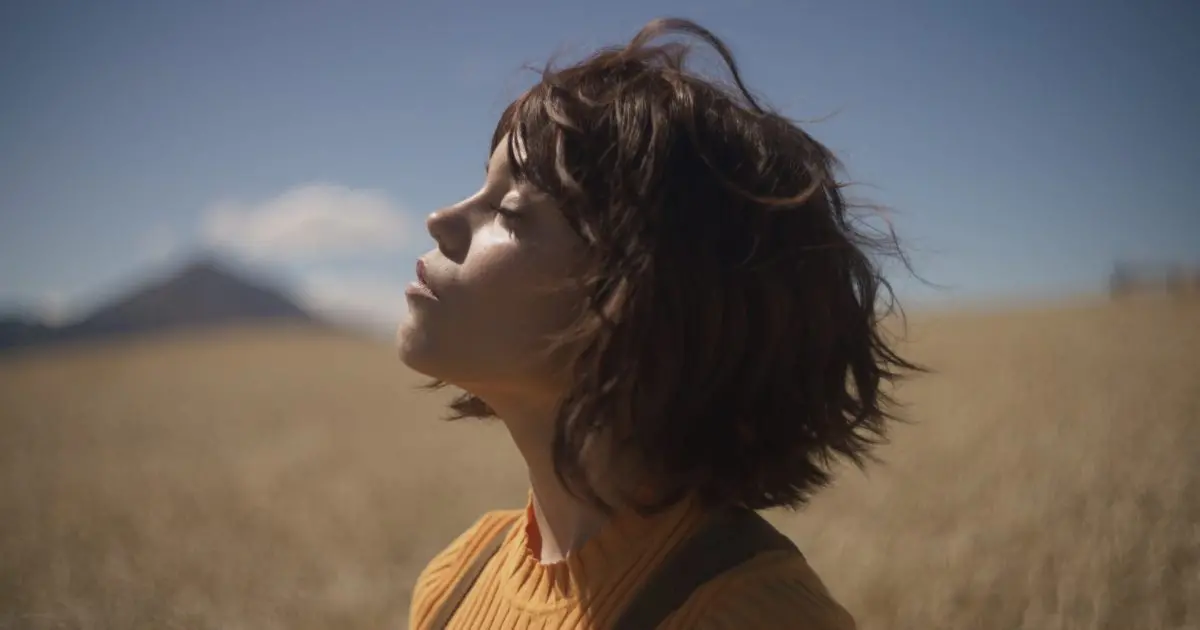
Taika Waititi’s Klara and the Sun arrives in theaters on October 23 with a deceptively gentle question at its center: what happens when people begin treating artificial intelligence not as a tool but as a substitute for the people they love? Adapted from Kazuo Ishiguro’s novel, the sci-fi drama follows Klara, a solar-powered Artificial Friend played by Jenna Ortega, as she forms a bond with Josie, a teenager whose health is failing. The film pairs Waititi’s vibrant visuals and offbeat humor with a darker meditation on loneliness, mortality, and the human cost of chasing perfection.
At first glance, the premise sounds like familiar science fiction. A machine enters a family home, learns to imitate human behavior, and becomes entangled in emotional territory that no piece of software should occupy. But Klara and the Sun is less interested in rampaging robots than in the quieter, more insidious fear that humans might willingly hand over their relationships, their identities, and their sense of purpose to machines. The result is a film that uses AI as a mirror rather than a monster.
A Different Kind of Artificial Intelligence
Klara is not the all-knowing superintelligence that dominates so much of pop culture. She does not arrive with the sum of human knowledge or a hidden plan to conquer civilization. She is, in many ways, a child in a robot body. She begins in a store, curious about the world beyond the glass, and she understands less about ordinary life than the humans who browse the shelves. Her solar-powered existence even leads her to imagine the Sun as a kind of god who lives in a barn and might answer her prayers.
That childlike wonder makes Klara unusual even among other Artificial Friends. She is optimistic, eager for affection, and sometimes almost doglike in her excitement. Yet the film does not reduce her to a dim-witted pet or a cold machine. She observes, learns, and changes. At first, she struggles to walk outside and calibrate to her surroundings. Over time, she ventures out on her own in the hope of helping Josie recover. Her growth gives the story its emotional center and distinguishes it from dystopian tales in which AI appears only as an all-powerful threat.
Instead of echoing The Terminator or The Matrix, Klara and the Sun presents a more sympathetic android. Klara offers love and hope to the people in her care, even as she is treated by some of them as property. The film’s most unsettling questions do not come from Klara’s capacity for cruelty. They come from the human characters’ capacity to discard, replace, and redesign one another.
The Fear of Being Replaced
The movie arrives in an era when AI has become part of the workforce and when many people have lost jobs, including in filmmaking. That real-world anxiety gives Klara and the Sun a sharp contemporary edge. Josie’s housekeeper, Melania, played by Rachel House, feels the fear immediately. She despises Klara from the moment the android enters the home, not because Klara has done anything malicious, but because her presence suggests that a machine might take over a role that belongs to a person.
That fear does not stay confined to the workplace. Josie develops it as well. As her health worsens, she watches her mother, Chrissie, played by Amy Adams, and her boyfriend, Rick, played by Aran Murphy, spend more time with Klara. The android can imitate anyone’s voice and mannerisms, which makes her a near-perfect replacement for Josie. Understandably, this drives a wedge between Klara and Josie, who is already desperate to find a place where she belongs.
The film eventually reveals that Chrissie plans to have Klara’s mind inhabit a robotic copy of Josie so that her daughter can, in a sense, live on after the real Josie dies. It is a terrifying idea: a parent trying to replace her child with a machine. But the story does not present it as simple villainy. Chrissie’s plan grows out of grief, control, and a belief that technology can solve the unbearable problem of loss. The way technology is advancing makes that belief feel less like fantasy and more like a warning.
When Humans Are Asked to Compete With Machines
While some characters try to replace humans with machines, Chrissie also pushes her daughter to compete with them. A severe perfectionist, she wants Josie to become more efficient by undergoing a process called lifting, which gives her advanced academic skills on par with a machine’s. The film shows that it is far harder for humans to copy machines than for machines to copy humans. The lifting process slowly kills Josie, turning her body into a casualty of her mother’s demand for excellence.
Klara faces a different kind of obsolescence. She is a discontinued model of Artificial Friend, considered too humanlike and too empathetic. Those qualities, which make her capable of genuine care, are treated as flaws. Chrissie initially hates her because she prefers a more advanced model. The parallel is striking: both Josie and Klara are expected to change themselves to become more efficient, and both are judged against a standard of perfection that no living being can meet.
This is where the film’s warning becomes most pointed. People often say they fear AI becoming too much like humans. Klara and the Sun suggests an even scarier possibility: people want humans to be less human. Employers and businesses increasingly turn to AI because it can complete tasks faster, without fatigue, without complaint, and without the messy needs of a person. In that environment, empathy can look like inefficiency. Curiosity can look like a bug. A childlike android who asks too many questions can seem obsolete, just as a sick teenager who cannot meet her mother’s standards can seem like a failed project.
Can a Machine Be a Real Friend?
At the heart of the film is Klara’s friendship with Josie, and their relationship raises difficult questions about humans looking to machines for companionship. In the story, the Artificial Friends exist in a world without the Internet, which was taken down after its role in starting World War III. Because the Internet had been essential to connecting people, it makes sense that people would turn to artificial companions to combat loneliness.
Yet the film refuses to treat that companionship as either pure salvation or pure catastrophe. Klara does provide Josie with friendship. She is patient, attentive, and willing to sacrifice her own safety for Josie’s well-being. But she cannot fill the emptiness left by Josie’s distant mother. Instead, Klara helps mother and daughter mend their broken relationship. Technology alone does not solve their problems. The breakthrough comes when Chrissie and Josie communicate their feelings and learn to understand each other.
At the same time, the film shows how easily some people treat androids as replaceable. Klara is likened to a slave or a pet who can be returned or abandoned in the wilderness. Her emotional depth does not guarantee her dignity in the eyes of the humans who own her. That contradiction is central to the movie’s view of AI: machines can offer comfort, but the terms of that comfort are shaped by the people who build, buy, and discard them.
The Real Threat Is Not the Machine
Klara and the Sun does not condemn AI outright. Its android protagonist helps the human characters and makes them feel loved and accepted. Klara is artificial, but her bond with Josie is real and meaningful. The movie suggests that AI can improve people’s lives, but not at the cost of connecting with other humans and accepting each other’s imperfections.
The more disturbing possibility is that people will use AI to avoid the hard work of being human. A machine can mimic a voice, remember a routine, and offer constant attention. It cannot erase grief, repair a family, or teach a person how to love someone who is flawed. When Chrissie tries to use technology to keep Josie alive, she risks replacing her daughter with a copy. When she pushes Josie to compete with machines, she risks destroying the very humanity she wants to preserve.
That is the future Klara and the Sun warns about. It is not a future in which robots rise up and enslave humanity. It is a future in which humans become so afraid of being replaced, and so obsessed with efficiency, that they start replacing one another first. The film’s quiet power lies in showing that the most dangerous machine may be the one people build inside their own expectations.
Source:Digital Trends News