

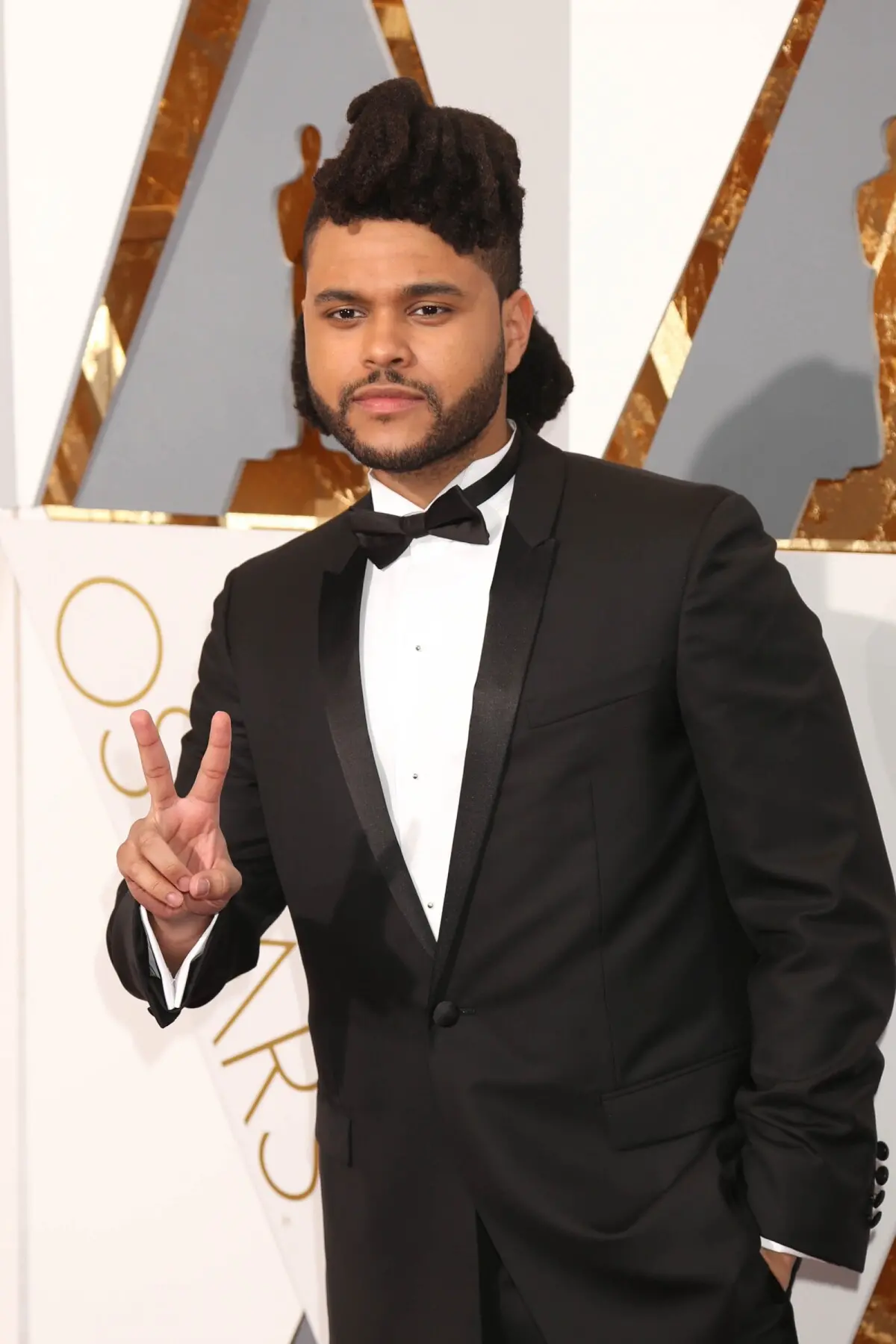
Abel Makkonen Tesfaye, the Canadian singer and songwriter known professionally as The Weeknd, appeared at the photocall for the 88th Academy Awards at the Dolby Theatre in Hollywood on February 28, 2016. The event placed him among the most photographed figures of Oscar weekend, and his presence was noted not only because of his musical success but also because of a visible change in his personal style. Photographs from the occasion showed the artist with a new haircut, a detail that quickly became part of the conversation around his appearance. For a performer whose image had long been closely tied to a distinctive hairstyle, the shift was more than a minor grooming choice; it signaled another step in the evolution of a career that had moved rapidly from underground acclaim to mainstream prominence.
Key Facts at a Glance
- Who: Abel Makkonen Tesfaye, professionally known as The Weeknd.
- Event: Photocall for the 88th Academy Awards.
- Location: Dolby Theatre in Hollywood.
- Date: February 28, 2016.
- Notable detail: The Weeknd appeared with a new haircut.
- Public context: He was widely identified as the boyfriend of model Bella Hadid at the time.
- Career context: The appearance came during the awards cycle for Beauty Behind the Madness and his Oscar-nominated song Earned It.
A High-Profile Stop During Oscar Weekend
The Academy Awards photocall is a familiar part of the awards-season ritual. Before the ceremony itself, nominees, performers and invited guests pass through a media corridor where photographers capture formal portraits and candid moments. The Dolby Theatre, located at the Hollywood and Highland complex, serves as the ceremony’s home and becomes a hub for international press during the final days of the awards race. In 2016, the 88th Academy Awards were held on February 28, and the photocall drew attention from entertainment outlets around the world. The Weeknd’s participation placed him in a formal Hollywood setting alongside actors, directors and musicians, reinforcing his status as a crossover celebrity rather than simply a recording artist.
The New Haircut and the Power of Image
The Weeknd had built much of his early mystique around a carefully controlled visual identity. His early releases were marked by atmospheric production, elusive public statements and a hairstyle that became part of his recognizable silhouette. By 2016, however, he was operating in a different sphere. The release of Beauty Behind the Madness in 2015 had transformed him into a pop radio fixture, and his appearances were no longer limited to music publications. A new haircut therefore carried symbolic weight. It suggested a readiness to revise the image that had helped define his earlier era while retaining the air of reinvention that had always surrounded his work. In celebrity culture, hair is rarely only hair; it is a signal of transition, grooming, branding and personal mood. For an artist whose visual presentation had been so closely read by fans, the change was bound to attract comment.
From Mixtape Mystery to Global Pop Star
To understand why the Oscar-weekend appearance mattered, it helps to revisit the trajectory that brought The Weeknd to the Dolby Theatre. Born in Toronto in 1990, Tesfaye began releasing music under the Weeknd name in 2011 with a series of mixtapes: House of Balloons, Thursday and Echoes of Silence. These projects combined hazy production, explicit storytelling and a sense of anonymity that made him one of the most discussed figures in alternative R&B. The mixtapes were later collected on Trilogy in 2012, and his major-label debut, Kiss Land, followed in 2013. That album deepened his cult following but also raised questions about how his sound would translate to a broader audience.
The answer arrived with Beauty Behind the Madness in 2015. The album produced massive singles including Can’t Feel My Face, The Hills and Earned It, and it won major awards attention. At the 58th Grammy Awards in February 2016, The Weeknd won Best Urban Contemporary Album for Beauty Behind the Madness and Best R&B Performance for Earned It. Those victories arrived just weeks before the Oscars, adding to the sense that he was in the middle of a breakthrough season. His music had moved from late-night internet discovery to arena-scale pop, and his public image was adjusting to the demands of that larger platform.
Oscar Night and the Music Race
At the 88th Academy Awards, The Weeknd was nominated for Best Original Song for Earned It, written for the film Fifty Shades of Grey. The song had already become one of the defining hits of the previous year, and its Oscar nomination confirmed its place in the awards conversation. He performed the song during the ceremony, bringing his polished, brooding stage presence to the Oscar audience. The Best Original Song category that year was won by Writing’s on the Wall from Spectre, performed by Sam Smith. Even without the win, the nomination represented a significant milestone for an artist who had once been associated with the more insular world of alternative R&B. The photocall on February 28 captured him at the threshold of that mainstream recognition, with the ceremony still ahead and the media cycle in full swing.
Bella Hadid and the Celebrity Couple Dynamic
The Weeknd’s appearance was also framed through his relationship with model Bella Hadid, who was widely identified in the press as his girlfriend at the time. The pairing of a chart-topping musician and a high-profile fashion model created a natural synergy between music, style and celebrity journalism. Their relationship drew attention at red-carpet events, fashion weeks and awards shows, and coverage often emphasized their visual compatibility as much as their individual careers. The phrase describing him as Bella Hadid’s boyfriend in the original report reflects how celebrity media frequently filters individual achievements through romantic associations. Yet the Oscar photocall also demonstrated the reverse dynamic: his own fame was sufficient to make his grooming and wardrobe part of the story, independent of any plus-one.
Why a Photocall Matters
A photocall may seem like a minor scheduling detail compared with the ceremony itself, but it plays a central role in the awards ecosystem. It gives photographers a controlled opportunity to capture images that will circulate across print, broadcast and digital platforms. For publicists, it is a chance to shape the visual narrative around a client. For audiences, it produces the images that become the lasting record of an event. The Weeknd’s photocall appearance therefore did more than document his attendance. It supplied a set of photographs that could be used to discuss his style, his relationship and his professional standing all at once. The new haircut became a visual hook, a small but memorable detail in a weekend crowded with fashion choices and celebrity sightings.
The 88th Academy Awards in Context
The 2016 Oscars took place amid intense discussion about diversity in Hollywood. The nominations were criticized for the absence of nonwhite acting nominees for a second consecutive year, and the hashtag OscarsSoWhite became a focal point of the pre-ceremony conversation. Chris Rock hosted the ceremony and addressed the controversy directly. In that environment, the presence of a Black musician at the top of the pop charts and in the Best Original Song race added another layer to the evening’s cultural dynamics. The Weeknd was not at the center of the diversity debate in the same way as the acting nominees, but his participation reflected the broader visibility of Black artists in contemporary music and the increasing overlap between music stardom and Hollywood prestige.
A Career in Transition
By the time of the 2016 Oscars, The Weeknd was no longer a newcomer. He was a proven hitmaker with a Grammy-winning album, a nominated song and a growing film and television presence. The years that followed would bring further evolution, including the 2016 album Starboy, which expanded his pop reach and produced another string of successful singles. The haircut seen at the photocall can be read as an early sign of that willingness to revise his image. Artists often use physical changes to mark new chapters, and for a performer whose early work depended on a sense of mystery, a cleaner, more polished look made sense as he moved deeper into the entertainment mainstream. The change did not erase his past identity; it layered a new one on top of it.
The Broader Meaning of a Style Shift
Fans and commentators pay close attention to the appearance of pop stars because style is part of the contract between artist and audience. A haircut can signal a new album, a new relationship, a new attitude or simply a desire for change. In The Weeknd’s case, the shift was modest in practical terms but notable in symbolic terms. It coincided with a moment when his music was reaching the widest audience of his career and when his relationship with Bella Hadid was drawing constant media attention. The photocall photographs froze that moment: a musician in formal Hollywood surroundings, carrying the confidence of a breakthrough year while visibly updating the image that had helped make him famous.
The record of February 28, 2016, therefore captures more than a passing grooming decision. It documents The Weeknd at the Dolby Theatre during the 88th Academy Awards, with Abel Makkonen Tesfaye’s professional persona fully engaged in the rituals of awards-season celebrity. The key facts remain straightforward: the artist, the event, the location, the date and the new haircut. Around those facts sits a larger story about reinvention, mainstream success and the way celebrity image is produced and consumed. The photocall images entered the visual archive of Oscar weekend, and the change they recorded became part of the public narrative of an artist who was, by then, no longer merely rising but fully arrived.
Source:Purepeople News