

Boaters operate in an environment where visibility, power reliability, stability, and navigation can change quickly. The newest marine technology aims to reduce those uncertainties through specialized sensors, ruggedized accessories, energy systems, and autonomous maneuvering. Five companies stand out for turning those ideas into practical products: SEA.AI, AquaAmp, Seakeeper, Sunreef Yachts, and Simrad.
Their work spans different parts of the boating experience. Some focus on seeing hazards earlier, others on keeping devices charged, reducing motion at sea, generating and managing power more efficiently, or helping a vessel dock itself. Together, they show how boating technology is moving from isolated gadgets toward integrated systems that support safety and comfort.
SEA.AI Brings Machine Vision to Marine Safety
Sophisticated cameras are common in many industries, but SEA.AI has made them central to a marine safety system. The company combines thermal cameras with proprietary machine vision AI. That system is designed to detect, classify, and track objects in real time. SEA.AI says its models have been trained on millions of maritime images collected since 2018.
The goal is not simply to show a clearer image. Machine Vision is intended to identify people in need of rescue, buoys of different types, and vessels of various sizes. Conventional tools such as radar remain valuable, but they can miss low-profile or poorly reflective hazards. A camera-based system with AI can add another layer of awareness, especially in crowded waterways, at night, or in poor visibility.
This matters because marine safety depends on time. The earlier a crew can spot a person, a floating object, or another vessel, the more time there is to react. SEA.AI's approach also points to a broader trend in boating technology: sensors are becoming smarter, and software is helping crews interpret what those sensors capture. Instead of replacing established navigation tools, machine vision can complement them and help fill gaps.
AquaAmp Focuses on Rugged Onboard Power
Not every important boating innovation is large or complex. AquaAmp, based in Tampa, Florida, specializes in custom waterproof OEM electronics for outdoor specialty vehicles. Its products are designed to integrate into dashboards and survive the demanding conditions found on boats. That focus on integration and durability is important because marine environments punish ordinary consumer electronics.
One of AquaAmp's notable products is a Qi2-certified charger that delivers 25 watts. The company describes it as a world first in the field. For boaters, wireless charging can reduce clutter and simplify the process of keeping phones, tablets, and other essential devices ready. Many general-purpose chargers are unreliable on the water, where moisture, vibration, and sudden movement can interrupt charging or cause a device to shift.
AquaAmp also uses MIL-STD-810H-tested magnet retention in some of its products. That testing standard is associated with rugged environmental conditions, and the magnet system is meant to keep devices in place when a vessel pitches or rolls. A charger may seem like a small accessory, but it can become critical when it is the only way to power a navigation app, communication device, or emergency tool. Reliable mounting and waterproof construction therefore matter as much as charging speed.
Seakeeper Targets Motion and Seasickness
Seasickness has affected travelers for centuries, and it remains one of the most common discomforts on the water. Larger vessels often handle pitch and yaw better than smaller ones because their size and mass provide greater stability. Seakeeper's technology aims to bring some of that stability to smaller boats through gyroscopic systems and its Ride family of products.
The company's gyro technology creates gyroscopic torque by using a flywheel that spins in a vacuum. The momentum of that spinning component produces force that reacts against the natural rocking of the vessel. In simple terms, the system works against the motion that makes boats uncomfortable. The result can be a steadier platform for passengers, crew, and equipment.
Seakeeper's Ride systems take a different but related approach. They are mounted on a boat's transom, where they can sense how the vessel is moving through the water. The system uses proprietary inertial sensing hardware and software to understand motion across all three axes: pitch, roll, and yaw. It then commands rotary blades to deploy and counteract those movements. For boaters who are prone to seasickness, or for crews that need a stable working platform, that kind of active stabilization can change the experience on board.
Sunreef Yachts Pushes Solar Integration
Sunreef Yachts is known for luxury catamarans and for its Eco range, which places a strong emphasis on efficient power and solar integration. The company designs its own solar panels for its vessels so that they can be mounted in different parts of a catamaran. The panels can also be modified for surface area, shape, and convenient detachment. Sunreef says they are among the lightest panels in the industry, a useful quality on a vessel where weight and space are carefully managed.
One of the company's distinctive ideas is the use of solar panels directly in bimini roofs. That approach can generate power without consuming additional deck space. Sunreef is also working on a system that would allow solar energy to power a vessel's boilers. These efforts reflect a wider interest in reducing reliance on fossil-fuel generators and improving the overall efficiency of onboard systems.
The company's Solar Skin technology is another example of space-conscious design. By integrating solar capability into the vessel's surfaces, Solar Skin helps avoid sacrificing valuable deck area for conventional panels. Sunreef also points to its gas-based air conditioning systems as a way to cut running costs. The company claims that the technology can operate throughout the night on batteries and consume 70 percent less energy than most systems in the yachting industry. For luxury yachts, efficiency is not only an environmental issue; it also affects noise, range, and the amount of power available for other systems.
Simrad Combines Fishing Data and Autonomous Docking
Simrad has Norwegian roots and a long history in marine electronics. Its modern product lineup includes tools for navigation, fishing, and vessel control. One example is FishCast, a subscription service that works through C-MAP charts on Simrad displays. FishCast uses ROFFS data and AI to give anglers forecasts of likely fishing spots.
The system draws on a decade of established fishing data and considers factors such as water temperature, historical patterns, and currents. Those variables can affect fish movement and habitat, so combining them into regular forecasts can help anglers plan more effectively. FishCast marks likely hotspots with fish symbols and provides a timeline of three-hour predictions that is updated every day. Rather than guaranteeing a catch, it gives users a structured way to interpret conditions and narrow down where to spend time.
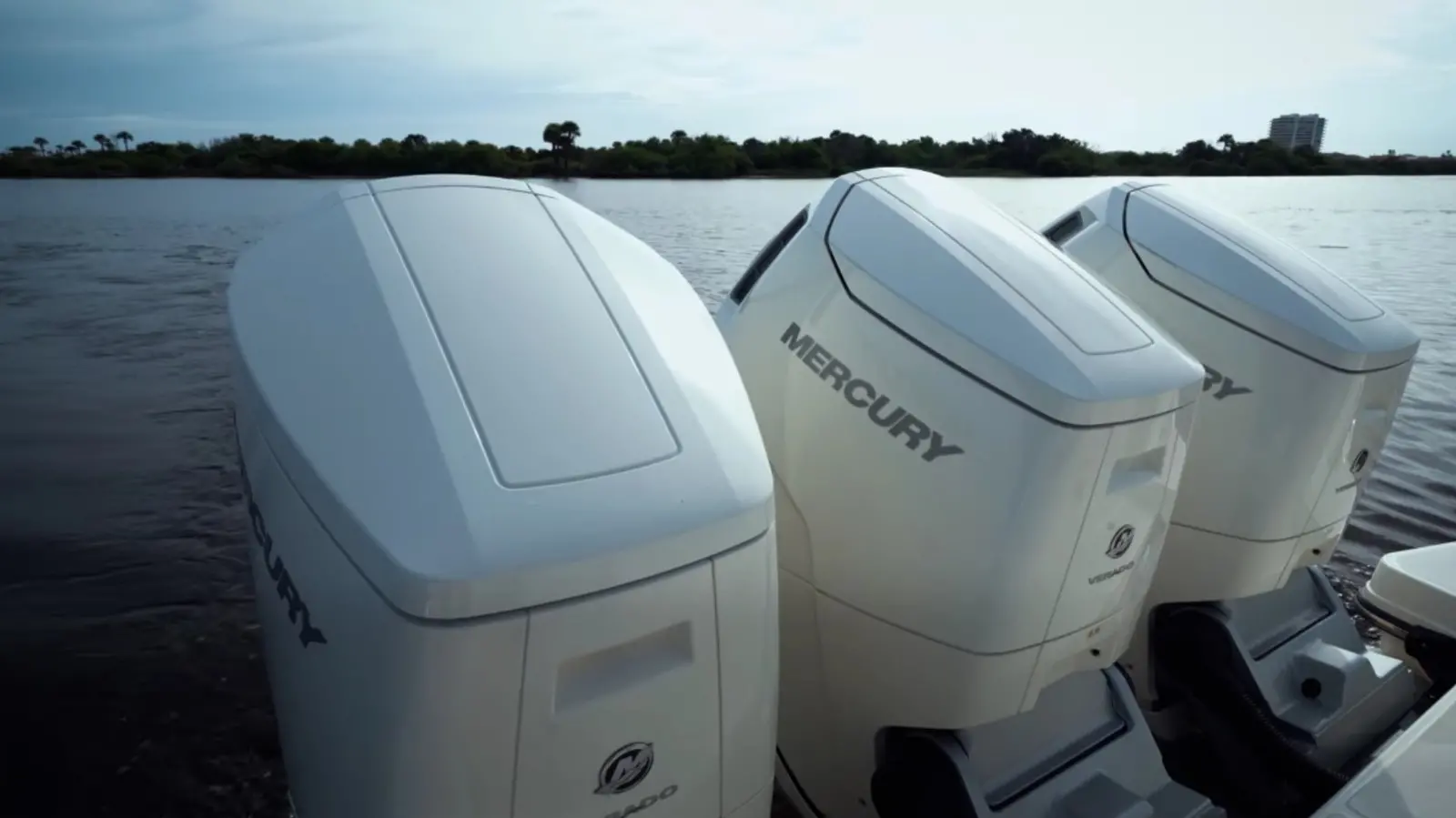
Simrad's AutoCaptain Autonomous Boating System represents a more ambitious step. The company unveiled the system in October 2025 and said it can handle full auto-docking capabilities, including docking, undocking, and short-distance maneuvering. Simrad describes AutoCaptain as true autonomous maneuvering rather than an assistance-based feature. The system was engineered with exclusive Mercury Marine propulsion integration, which matters because docking is a coordinated task involving propulsion, steering, and sensor data. That integration is a key part of what makes autonomous docking more than a collection of separate add-ons.
Source:SlashGear News