

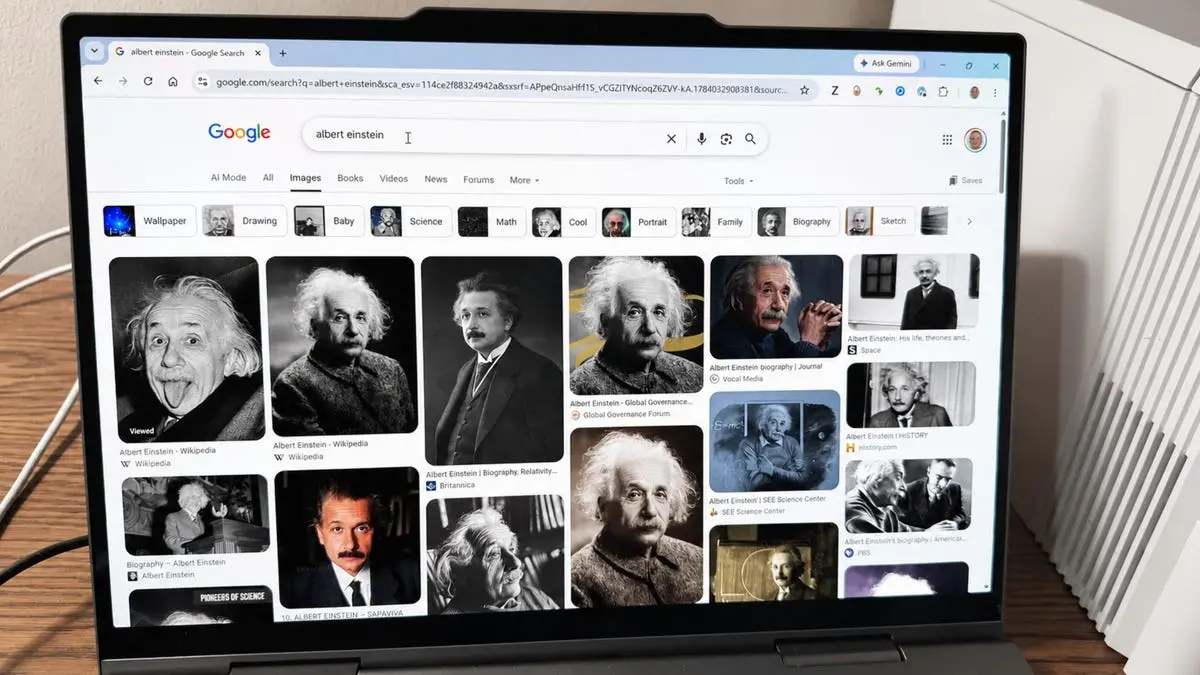
Google Search has long been the primary gateway to the web's information, but now it is also becoming a canvas for visual creativity. With the latest update, users can generate AI images directly inside AI Overviews, the search giant's AI-powered summary panel. This feature eliminates the need to leave the search results page or use a separate tool when you cannot find the perfect image through traditional search.
The announcement came as part of Google's celebration of Google Images' 25th birthday. In a blog post, Google noted that while millions of images exist online, sometimes you have a highly specific vision that does not yet exist. To address this, Google is bringing image generation into AI Overviews. When a standard image search does not deliver the desired results, your search term can transform into a text prompt. Google's latest model, the Nano Banana, then conjures up an image tailored to your request.
This capability is not entirely new—Google already offered image generation in its dedicated AI mode within Search—but this marks the first time it appears directly in AI Overviews, which are visible in regular search results. The rollout will begin in English over the coming weeks, and any region that currently supports image creation in AI mode will also have access within AI Overviews. Users simply need to perform a search, and if the AI Overviews panel appears, they can opt to generate an image. The generated images can be further refined by adjusting the prompt, and multiple variations are offered.
How the Nano Banana model powers image creation
The Nano Banana model is Google's latest iteration of its image generation technology, designed to work efficiently within the constraints of real-time search. Unlike earlier models that required separate software or significant computing power, Nano Banana is optimized for quick inference, producing an image in seconds. It builds on Google's earlier Imagen architecture but is fine-tuned for the diversity of web queries. The model understands complex prompts that include objects, styles, and context, making it suitable for everything from photorealistic landscapes to abstract illustrations.
Google has not disclosed all the technical details, but early reports suggest that Nano Banana uses a diffusion process that starts from a random noise pattern and iteratively refines it based on the text prompt. Safety filters are applied to prevent the generation of harmful or explicit content. Additionally, watermarking technology ensures that all AI-generated images are identifiable as synthetic, addressing concerns about misinformation and copyright. Users can download and use these images, but Google retains the right to improve its models based on the prompts submitted.
Google Images gets a real-time makeover
Alongside the AI image generation feature, Google Images itself is receiving a significant makeover. The gallery of images will become more dynamic, updating in real time as new content becomes available and as Google's algorithms better understand your interests. This means that as you browse, the thumbnails may shift to prioritize images that are trending or more relevant to your search history and preferences.
Another key change is the way saved images are managed. Previously, users could save images to a collection but had to navigate away from the search results to view them. Now, collections will appear as tabs above the main image gallery. This allows you to switch back and forth effortlessly between your ongoing search and your saved images, making it easier to compile mood boards, reference materials, or shopping lists. The new interface will roll out to Google Images on desktop in the US in English, requiring a Google account sign-in to use.
These updates are part of a broader trend of integrating AI deeper into Google's core products. The company has been rolling out AI Overviews globally for text-based queries, and now visual queries are getting the same treatment. The move also positions Google to compete with dedicated AI image generators like DALL-E, Midjourney, and Adobe Firefly, but with the advantage of being directly accessible from the world's most popular search engine.
Practical use cases and limitations
For everyday users, the ability to generate images on demand opens up numerous possibilities. Teachers can create custom illustrations for lesson plans, small business owners can generate product mockups, and social media managers can produce unique graphics for posts. The feature is also useful for brainstorming visual concepts without the need for expensive design software. Since the generation happens inside AI Overviews, users can iterate quickly by modifying the prompt and seeing new results immediately.
However, there are limitations. The quality of generated images can vary, especially for very specific or obscure prompts. The Nano Banana model may struggle with text rendering, complex human anatomy, or intricate scenes with many objects. Additionally, the feature is currently limited to English-language searches rolling out in select regions. Google has not announced a timeline for broader language support or availability on mobile devices, though it is likely to expand over time.
Privacy is another consideration. When you submit a prompt for image generation, that data is processed by Google's servers and may be used to improve the model. Users concerned about their search data should be aware that this feature, like other AI Overviews, collects information to personalize results. Google states that it anonymizes and aggregates data, but no system is completely private.
The evolution of Google Images: From static gallery to AI canvas
Google Images launched in July 2001 as a simple search tool that scraped image metadata from web pages. Over the years, it evolved to support larger thumbnails, advanced filters, and reverse image search. The introduction of AI-generated image creation marks a fundamental shift—instead of only finding images that already exist, Google now helps users create new ones. This aligns with the broader industry move toward generative AI as a productivity tool.
The 25th anniversary is a milestone that highlights how far visual search has come. Early adopters relied on basic keyword matching, but modern Google Images uses computer vision to understand the content of photos, categorize them, and even identify objects within them. The new makeover with real-time updates and integrated collections is a natural progression, making the interface more responsive to user behavior. The addition of AI image generation is the next logical step, turning a passive search engine into an active creation tool.
Competitors are not standing still. Microsoft's Bing Image Creator, powered by DALL-E, offers similar functionality within the Bing search engine. Apple is rumored to be integrating image generation into its Photos app and Siri. And startups like Stability AI continue to release open-source models that anyone can run locally. Google's advantage lies in its massive user base and the seamless integration with its ecosystem—Gmail, Google Drive, and Google Workspace all benefit from having image generation accessible from any search.
Experts predict that within a few years, image generation will be as common as text autocomplete. Users will expect to refine search results not just by filtering but by creating. Google's latest move is a step toward that future, lowering the barrier for non-designers to produce high-quality visuals. However, the company must also address ethical concerns: deepfake detection, copyright on AI-generated art, and the displacement of stock photographers and graphic designers.
As the rollout begins, early feedback from beta testers suggests that while the images are not always perfect, the convenience factor is high. The ability to stay within a single search window instead of jumping to a separate AI tool reduces friction. Over time, as the Nano Banana model improves and the interface becomes more sophisticated, Google hopes to make image generation a standard part of the search experience.
The update is another reminder that AI is not a separate destination but a layer infused into everything we do online. For now, users eager to try the feature can perform an image search on Google, look for the AI Overviews panel, and click the option to generate an image. The result may not always match your mental picture perfectly, but it will be a unique creation, born from your words and Google's nano-scale banana—or rather, Nano Banana.
Source:ZDNET News