

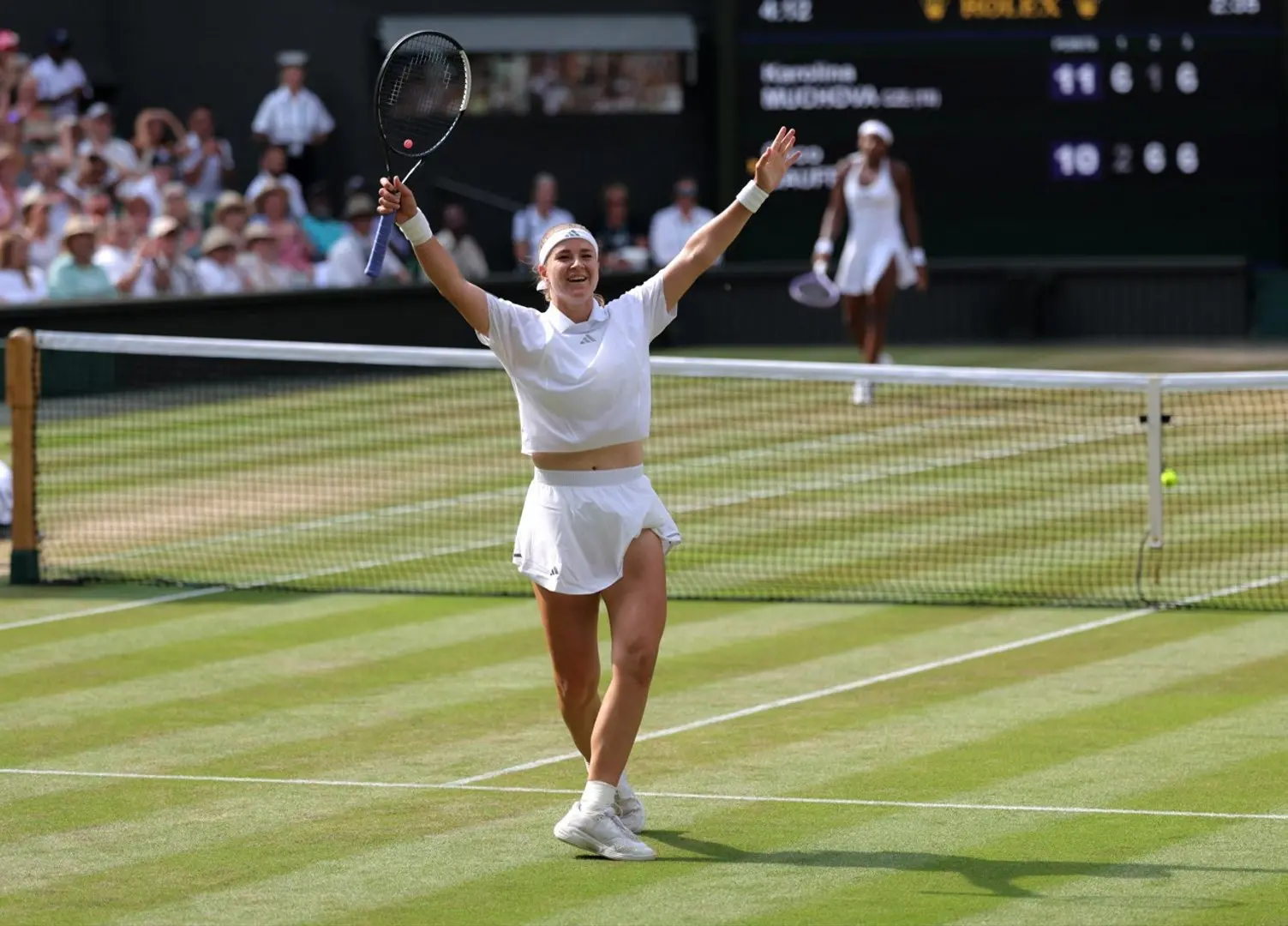
Headline: Karolina Muchova Stuns Coco Gauff in Super Tiebreak to Reach Wimbledon Final
Key Facts:
- Muchova defeated Gauff 6-2, 1-6, 7-6(12) in the semifinals.
- The Czech becomes the first qualifier for the 2024 Wimbledon women's final.
- This is Muchova's second Grand Slam final, following Roland Garros 2023.
- Muchova saved multiple match points in the super tiebreak to secure victory.
- Gauff, the 2023 US Open champion, was seeking her first Wimbledon final.
- The match lasted 2 hours and 22 minutes.
- Muchova will face either Ons Jabeur or Markéta Vondroušová in the final.
Match Summary
In a contest that swung wildly from one extreme to the other, Karolina Muchova eventually triumphed over Coco Gauff in a super tiebreak that had the Centre Court crowd on the edge of their seats. The final scoreline of 6-2, 1-6, 7-6(12) told only part of the story. The first set was a masterclass from Muchova, who broke Gauff twice and dominated with her variety of slice, drop shots, and net play. Gauff, however, stormed back in the second set, hitting with ferocious topspin and moving forward to cut off angles, dropping just one game. The decider became a tense battle of nerves, with both players holding serve until a tiebreak that featured multiple twists. At 6-6 in the tiebreak, Muchova faced two match points, but she saved them with courageous first serves and clean winners. At 12-12, she finally converted her fourth match point when Gauff netted a backhand.
Path to the Final
Muchova's journey to the final has been nothing short of remarkable. The 27-year-old from Olomouc had to qualify for Wimbledon after a series of injuries derailed her 2023 season following her runner-up finish at Roland Garros. She came through three qualifying rounds without dropping a set, then dispatched Jil Teichmann, Irina-Camelia Begu, and Xiyu Wang in the main draw before a hard-fought quarterfinal win over Jessica Pegula. Her semifinal performance against Gauff showcased her ability to adapt and problem-solve under pressure—a hallmark of her game. Muchova has long been regarded as one of the most talented players on tour, capable of playing at a top-5 level when healthy. Her unorthodox style—mixing flat groundstrokes with heavy spin, volleys, and sudden changes of pace—poses unique challenges for opponents.
Gauff's Resilience
Coco Gauff, the 20-year-old American, entered Wimbledon as the second seed and one of the favorites. She had enjoyed a stellar year, winning titles in Auckland, Linz, and reaching the semifinals of the Australian Open and the final of the French Open. Her run at Wimbledon included impressive wins over Caroline Dolehide, Anhelina Kalinina, and Madison Keys. Against Muchova, Gauff showed incredible fighting spirit, particularly in the second set where she played near-flawless tennis. In the third set, she saved two break points to stay in the match and then had the upper hand in the tiebreak before Muchova's clutch play denied her. Despite the loss, Gauff's consistency and mental toughness suggest she will be a contender at major events for years to come.
Muchova's Unique Game
Muchova's game is defined by its unpredictability. She possesses a one-handed backhand that can generate both slice and topspin with equal ease, and her forehand is equally dangerous. What sets her apart, however, is her willingness to come to the net. In the semifinal, she won 23 of 33 net approaches, neutralizing Gauff's powerful groundstrokes. Moreover, her serve, though not the fastest, is placed with precision, allowing her to dictate points. This all-court style draws comparisons to former Wimbledon champions like Martina Navratilova and Jana Novotná, both of whom also hailed from the Czech Republic. Muchova's victory continues a strong tradition of Czech tennis at Wimbledon, with Petra Kvitová having won the title twice and Markéta Vondroušová the defending champion.
Historical Context
This year's Wimbledon women's singles has been marked by upsets and Cinderella stories. With Iga Świątek eliminated in the third round and Aryna Sabalenka withdrawing due to injury, the draw opened up. Muchova's run to the final, coming through qualifying, is reminiscent of similar feats by qualifiers at Grand Slams. Only three qualifiers have reached the Wimbledon women's final before: Maria Sharapova (who won as a qualifier in 2003), Jana Novotná (1993), and most recently Alison Riske-Amritraj (2019). Should Muchova win the title, she would become the second qualifier in the Open Era to claim the Venus Rosewater Dish, following Sharapova. The significance extends beyond statistics: Muchova's comeback from multiple abdominal surgeries and a recurring shoulder problem underscores the physical toll of professional tennis. Her resilience off the court mirrors the tenacity she displays on it.
Looking Ahead
The final on Saturday poses a fascinating matchup. Muchova's opponent will be either Ons Jabeur, the 2022 and 2023 runner-up, or Markéta Vondroušová, the defending champion. If it is Jabeur, spectators will witness a contrast between Muchova's versatility and Jabeur's creativity, both players known for their shot-making. If it is Vondroušová, an all-Czech final would be the first since 2019 when Ashleigh Barty faced Karolína Plíšková—except that final featured two players from the Czech Republic. A Muchova-Vondroušová final would also be historic: two qualifiers facing off for a major title, an unprecedented scenario in the Open Era. Regardless of the outcome, Muchova has already guaranteed a career-high ranking and earned a place among the elite. For Gauff, the loss will sting, but her future remains bright. She will likely return to the practice court to work on her return of serve and net play, which were exposed by Muchova's variety. The Wimbledon fortnight continues to deliver drama, and the women's final promises to be a fitting conclusion.
Source:beIN SPORTS News