

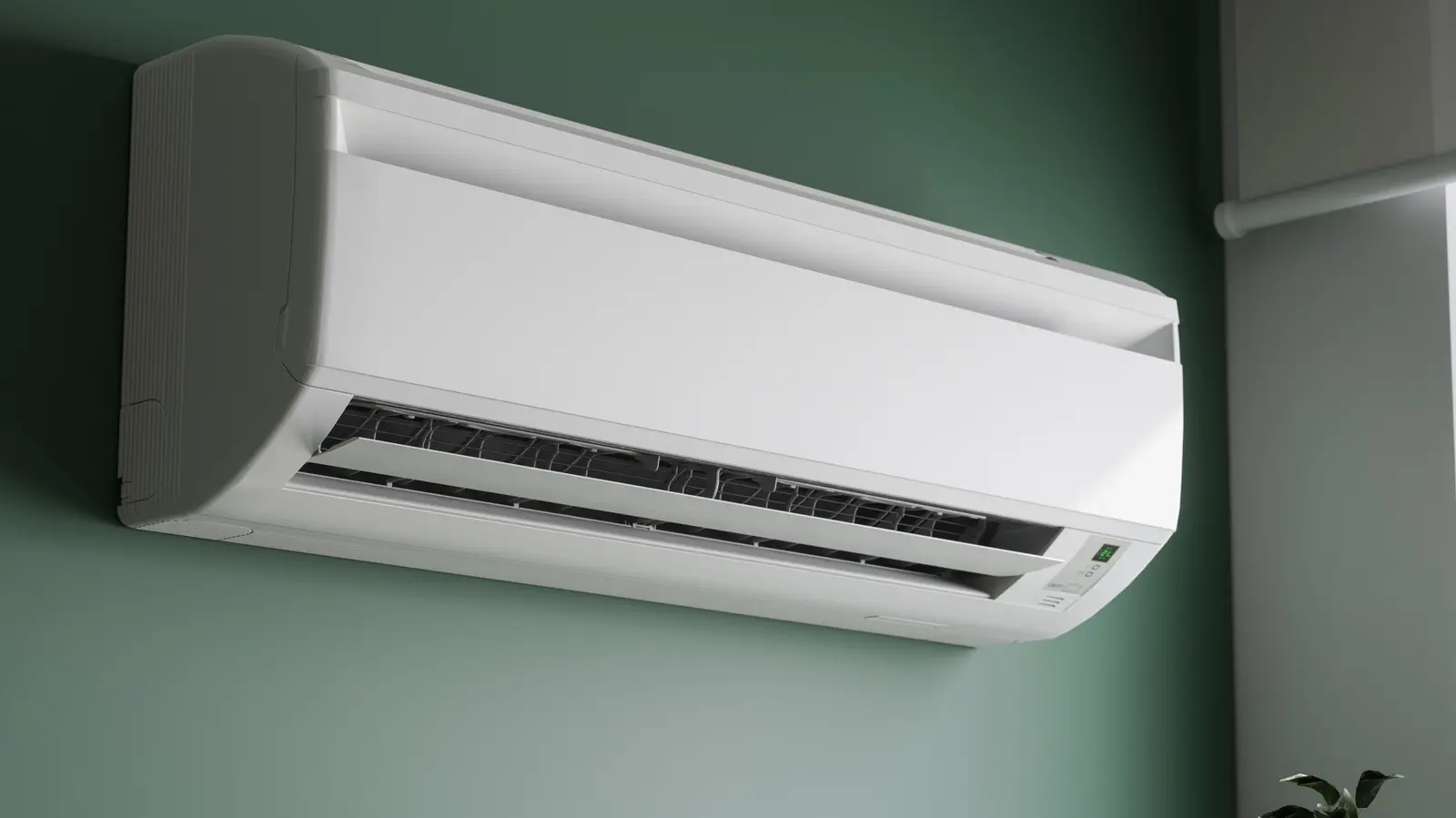
Summer heat is scorching across the United States and people are likely adjusting their air conditioners from the ideal temperature in an effort to cool down. Though it seems like a quick and easy fix, there's a complex process happening inside an AC unit, which is where the 3-minute rule comes in. This rule involves the AC's components and how they function during normal operation. The "3-minute rule" describes compressor control behavior built into HVAC systems. This control determines the restart timing after the AC unit shuts down, which is typically around 3 to 5 minutes. These systems manage the compressor's operation through timed cycles which are linked to thermostat demand. This includes set limits on how quickly the compressor can turn on and off, instead of tracking a fixed number of cycles.
The reason for the 3-minute gap is to keep the system from starting up too quickly after it shuts down. Without it, an AC unit would cycle on and off too frequently and put mechanical strain on the system and decrease the unit's operational efficiency. Air conditioners already share some common problems, and a unit that cycles too much could result in a house feeling cool but humid at the same time. At the very least, it could cause inconsistent temperatures from one room to the next.
Inside AC Compressors and Why the Delay Matters
The compressor is the main part of the air conditioning system and it's responsible for circulating refrigerant through the unit. This is done through a process in which the low-pressure refrigerant gas is compressed into a high-pressure state, which allows for heat to be released through the condenser coil. When that happens, the refrigerant cycles back indoors, which allows cool air to be circulated back into the home as heat is pulled out. Because of the work it does, the compressor's effectiveness impacts how efficiently the unit performs.
To understand the 3-minute rule more deeply, it helps to look at the physics involved. When an air conditioner runs, the compressor builds up high pressure on the discharge side. If the system is turned off and then quickly restarted, the compressor must fight against that residual pressure differential, which can cause excessive current draw, overheating, and potential damage to the motor. The delay allows the system pressures to equalize, reducing the load on the compressor during startup. Modern air conditioners have built-in timing circuits or software that enforce this waiting period, often through a time-delay relay or a programmable logic controller.
Without this built-in safeguard, homeowners might notice their AC unit short-cycling. Short-cycling not only wastes energy but also accelerates wear on components like the contactor, capacitor, and compressor itself. Over time, this can lead to costly repairs or premature system failure. Additionally, short-cycling prevents proper dehumidification because the evaporator coil does not remain cold long enough to condense moisture from the air. That explains why a rapidly cycling AC can leave a house feeling cool yet clammy.
Maintaining the 3-minute rule is relatively straightforward. Most modern thermostats and HVAC controllers already incorporate this delay. However, if a thermostat is replaced with an incompatible model or if the system is improperly wired, the delay may be bypassed. Homeowners should ensure their thermostat is compatible with their AC unit and consider using a programmable thermostat that includes a compressor protection feature. Some high-end thermostats even display the time remaining before the compressor can restart, giving users feedback about the system status.
Alternative Cooling Technologies: Evaporative Coolers
In contrast, evaporative coolers, also known as swamp coolers, use water evaporation instead of refrigerant-based compression. These systems work through a process in which water-soaked pads cool outdoor air passing over them, and that air is then pulled into the home. Unlike AC compressors that rely on a timed restart schedule, evaporative coolers bring in fresh air continuously. These units are typically more energy efficient, though they do need a constant water supply to be effective. They also tend to work best in dry climates.
Evaporative cooling has been used for centuries, originating in ancient Egypt and Persia where wind towers and water features were employed. Today's swamp coolers are much more sophisticated, using pumps, pads, and fans to maximize evaporation. One major advantage is the low electrical consumption: they use only a fraction of the power of a standard compressor-based AC. However, they require regular maintenance, including pad replacement and mineral deposit cleaning. In humid areas, evaporative coolers are less effective because the air is already saturated with moisture, reducing the evaporation rate.
For homeowners in arid regions like the southwestern United States, evaporative coolers can be a cost-effective alternative. They also add humidity to dry indoor air, which can be beneficial for respiratory health. But they cannot be used in basements or poorly ventilated spaces because they rely on exhaust air to push out stale indoor air. Proper installation involves an open window or vent to allow continuous air exchange. The 3-minute rule does not apply to these systems because they lack a compressor, but they have their own operational constraints, such as the need for water line supply and drainage.
Absorption Heat Pumps: A Compressor-Free Approach
Absorption heat pumps/coolers also do not use compressors in order to provide cool air, though this technology is typically installed in large residential or commercial environments. These systems utilize a cycle in which a heat source like natural gas drives an ammonia-water process to move heat. A low-power pump then circulates the solution and restarts the cycle. This allows the space to cool as heat is transferred out.
Absorption cooling relies on the affinity between ammonia and water. Heat from a burner or waste steam separates the ammonia from the water in a generator. The high-pressure ammonia vapor then condenses and evaporates, absorbing heat from the building. The ammonia is reabsorbed into water in an absorber, and the cycle repeats. Because the primary energy input is heat, these systems can use natural gas, solar thermal, or even waste heat from industrial processes. This makes them attractive for off-grid applications or where electricity is expensive.
However, absorption chillers are bulkier, heavier, and more expensive than vapor-compression systems. They are most common in commercial buildings, large hotels, and industrial facilities that have access to low-cost heat sources. For residential use, small-scale absorption heat pumps exist but are not widespread. They have no compressor to protect, so the 3-minute rule is irrelevant. Instead, they have their own startup sequences to avoid thermal shock and ensure proper solution circulation.
In summary, the 3-minute rule is a critical design feature in modern compressor-based air conditioners that prevents damage and improves efficiency. Understanding this rule helps homeowners troubleshoot short-cycling issues and appreciate the engineering behind their cooling systems. Meanwhile, alternative technologies like evaporative coolers and absorption heat pumps offer different benefits and challenges, but all aim to keep indoor spaces comfortable during hot weather.
Source:SlashGear News