

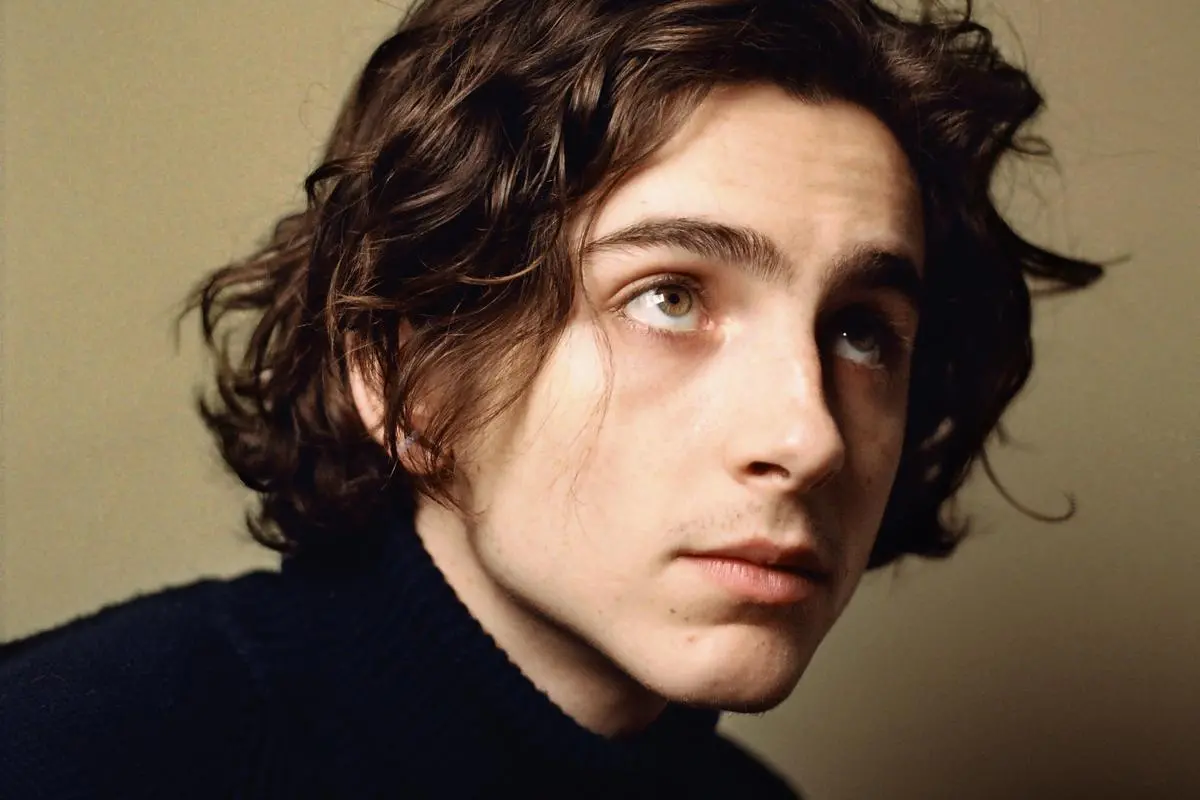
In 2020, shortly after completing principal photography for Denis Villeneuve's 'Dune', Timothée Chalamet received an email that would alter his trajectory in Hollywood. It was from Tom Cruise. The 'Mission: Impossible' star, known for his relentless dedication to practical stunts, shared contact information for his personal helicopter trainer, motorcycle coach, combat instructor, and climbing expert. This moment signified Chalamet’s induction into the elite realm of action-hero filmmaking. For the actor who had failed an audition for 'Spider-Man' in 2015, it was a clear signal of his rise from the independent film circuit to the global blockbuster stage.
Born in New York City to a French mother and American father, Chalamet cultivated an early passion for performance. He attended the LaGuardia High School of Music and Art, the same institution that produced Al Pacino and Nicki Minaj. His early roles in television and small films showcased a raw vulnerability that set him apart from his peers. But it was Luca Guadagnino's 'Call Me by Your Name' (2017) that catapulted him into the cultural spotlight. As Elio Perlman, a teenager navigating first love in 1980s Italy, Chalamet delivered a performance that was both tender and fiercely intelligent. The film challenged conventional portrayals of young male desire, earning Chalamet an Academy Award nomination for Best Actor. At 22, he became the youngest nominee in that category since 1939.
This role established a pattern: Chalamet gravitates toward characters who exist outside stereotypical masculine molds. In 'Beautiful Boy' (2018), he played a young man grappling with meth addiction, portraying vulnerability without sentimentality. In 'Little Women' (2019), he embodied Laurie, a wealthy neighbor whose romantic ardour and emotional openness defy the stoic male lead archetype. Even in 'The King' (2019), a historical drama where he played Henry V, Chalamet infused the monarch with an insecurity rarely seen in medieval epics. Each performance chips away at the monolithic image of male stoicism, suggesting that strength can coexist with sensitivity.
With 'Dune' and its sequel 'Dune: Part Two', Chalamet tackled a different kind of challenge: the science-fiction epic. Paul Atreides, the messianic figure at the story’s core, is a reluctant leader burdened by destiny. Villeneuve’s adaptation emphasizes Paul’s internal conflict rather than his physical prowess. Chalamet’s portrayal balances moments of doubt with flashes of authority, mirroring the actor’s own navigation of fame. The film’s box-office success—over $700 million worldwide for the first installment—cemented Chalamet’s status as a bankable star. Yet he remains an anomaly: a leading man who does not fit the classic action hero physique or demeanor.
This divergence from tradition is precisely what makes him compelling to audiences. Hollywood has long worshipped square-jawed tough guys like John Wayne or Arnold Schwarzenegger. More recently, actors like Chris Evans and Henry Cavill have sustained the muscular ideal. But Chalamet’s appeal lies in a different register: he is slender, often described as “elfin,” with a penchant for high-fashion red-carpet looks that blur gender norms. His candid interviews about anxiety, therapy, and imposter syndrome further dismantle the facade of invulnerability. In a 2023 interview with 'GQ', he spoke openly about feeling insecure on set and the pressure to maintain a certain image. Such honesty resonates with a generation that values emotional intelligence over stoic silence.
The Tom Cruise anecdote is revealing not only for its content but for what it says about Chalamet’s position in the industry. Cruise, emblematic of old-school Hollywood masculinity, saw in Chalamet a potential successor—but one who would redefine the template. While Cruise’s star persona relies on physical mastery and death-defying stunts, Chalamet’s magnetism stems from intellectual and emotional depth. Their interaction symbolizes a transfer of cultural relevance, with Chalamet representing a masculinity that is both softer and more complex.
Chalamet’s upcoming projects further underscore this evolution. He is set to star as Willy Wonka in 'Wonka' (2023), a role that demands whimsy and eccentricity. He will also portray Bob Dylan in an upcoming biopic, tackling the layered persona of a musical icon who defied categorization. Each role requires a different facet of his talent, reinforcing the idea that masculinity is not a fixed state but a spectrum. In this sense, Chalamet is not merely an actor but a cultural catalyst, prompting discussions about what it means to be a man in the 21st century.
Critics have noted that Chalamet’s career mirrors broader societal shifts. The MeToo movement, debates about toxic masculinity, and the rising popularity of male artists who embrace vulnerability (think Harry Styles or Kid Cudi) have created space for alternative male icons. Chalamet occupies this space with ease. His social media presence is minimal, he rarely courts controversy, and he uses his platform to advocate for environmental causes and racial justice. This combination of talent, authenticity, and social consciousness makes him a role model for many young men seeking permission to be multifaceted.
Also available: Behind the scenes of 'Dune: Part Two', reports indicate that Chalamet spent months training in martial arts and sword fighting. Yet in promotional interviews, he downplays his physical transformation, focusing instead on Paul’s psychological journey. He acknowledges the privilege of his FTLOP—French-American background, his supportive family, and the opportunities that followed 'Call Me by Your Name'.
Other actors have similarly challenged norms. For instance, Andrew Garfield openly wept during interviews, while Daniel Radcliffe embraced quirky indie projects. But Chalamet’s impact is arguably more pronounced because he achieves mainstream success while remaining unapologetically authentic. He has normalized the idea that a male star can be both a heartthrob and a thoughtful artist without sacrificing box office potential.
As the film industry continues to evolve, Chalamet stands at the forefront of a new paradigm. The old rules no longer apply: a leading man need not be over six feet tall, built like a linebacker, or emotionally unavailable. He can be slender, sensitive, and unafraid to explore the darker corners of the human psyche. This evolution is not just Hollywood’s—it mirrors changes in how society views gender roles. Chalamet’s performances invite viewers to expand their definitions of strength, courage, and heroism.
In 'Dune', Paul Atreides says, “Fear is the mind-killer.” Chalamet’s career can be seen as a refusal to let fear dictate his choices. He has taken risks—turning down franchise offers to pursue passion projects, working with auteur directors, and prioritizing artistry over fame. This approach has not only earned him critical acclaim but also a legacy that extends beyond any single role.
With 'Dune: Part Two' due in 2024, anticipation is high. The film promises to deepen Paul’s transformation into a revolutionary leader, a role that demands both gravitas and vulnerability. Chalamet is likely to deliver a performance that cements his place as the definitive actor of his generation. Meanwhile, his influence on pop culture continues to grow. Men’s fashion has seen an increase in gender-fluid designs partly due to his red-carpet appearances. Discussions about male mental health have been enriched by his candidness. And young actors now cite him as an inspiration
Source:Le Nouvel Obs News