

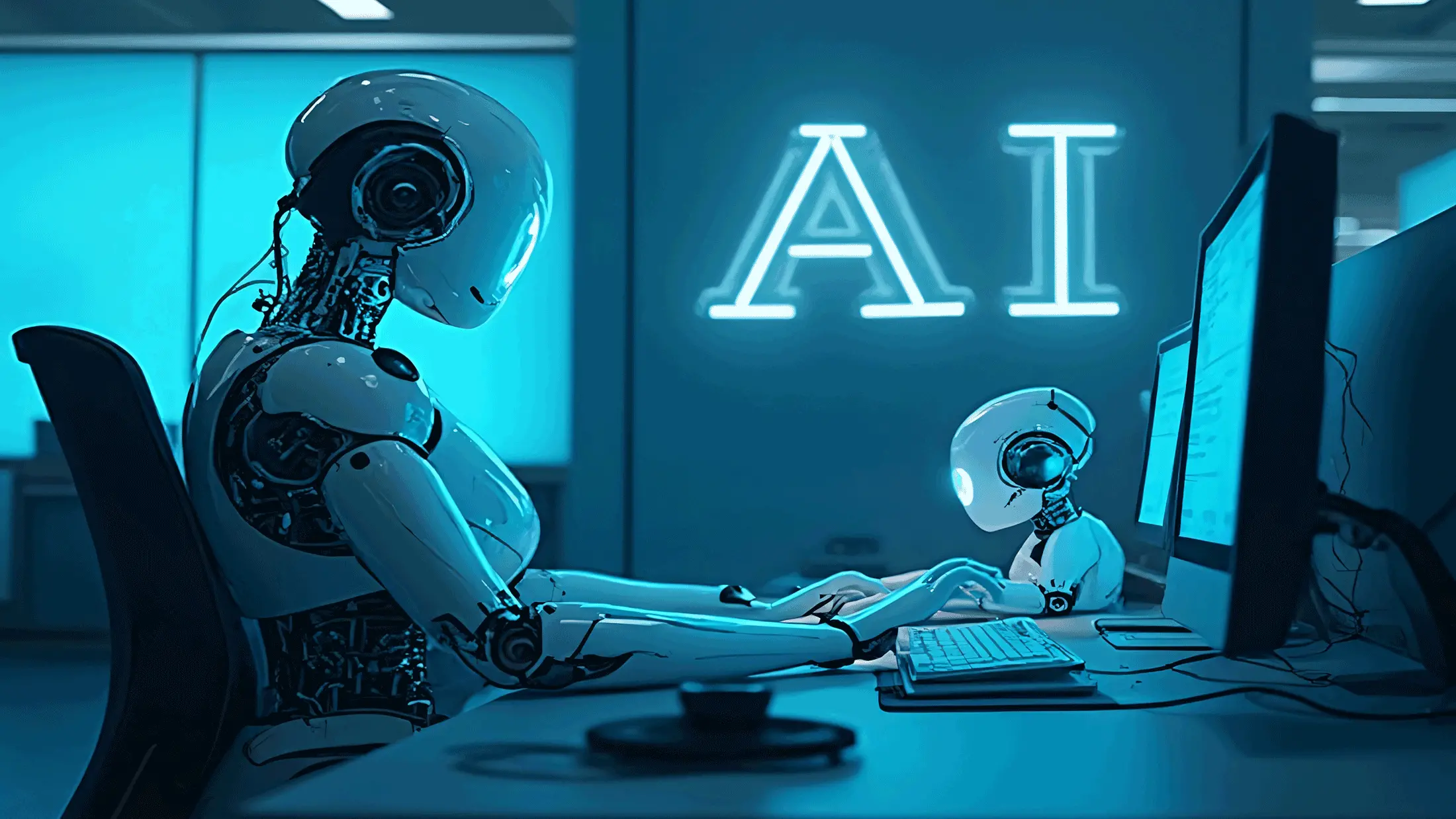
The world of work is undergoing a seismic shift. Artificial intelligence is no longer a futuristic concept—it is already transforming industries, reshaping job roles, and making many workers question the stability of their positions. A new survey has found that barely any workers feel their job is secure, with concerns about AI refusing to fade. The findings underscore a deep unease among employees, even as economists and policymakers debate the long-term impact of automation.
The poll, conducted across several developed economies, reveals that more than 80% of workers believe their role could be significantly altered or eliminated by AI within the next decade. Only 12% of respondents expressed confidence that their current job would remain largely unchanged. This sentiment cuts across age groups, though younger workers are slightly more optimistic, possibly because they are more accustomed to rapid technological change.
Perhaps the most striking aspect of the survey is the breadth of concern. It is not only blue-collar workers in manufacturing or logistics who feel threatened. White-collar professionals, including graphic designers, accountants, paralegals, and even some software engineers, now report heightened anxiety about job security. The rise of generative AI tools capable of producing text, images, and code has made these fears more concrete.
Historical Context: Automation Anxiety is Not New
Worries about technology replacing human labor have surfaced with every major industrial revolution. The Luddites of 19th-century England smashed weaving machines, fearing the loss of their livelihoods. The advent of personal computers in the 1980s sparked widespread concern about job obsolescence. Yet, each technological leap ultimately created new opportunities, even as it rendered certain roles obsolete. Many economists argue that AI will follow a similar path, eliminating some jobs while creating others that we cannot yet imagine.
However, the current wave of automation feels different. AI capabilities are advancing far more rapidly than previous technologies, and they are encroaching on cognitive tasks once considered uniquely human. Unlike earlier shifts that primarily affected routine manual work, AI now threatens knowledge workers, creative professionals, and decision-makers. This broad scope amplifies the sense of vulnerability.
Key Industries at Risk
According to recent analyses, sectors such as customer service, data entry, translation, content creation, and legal research are among the most exposed. In customer service, chatbots and virtual assistants can handle a growing share of inquiries, reducing the need for large human teams. Data entry jobs are increasingly automated through optical character recognition and intelligent processing. Generative AI can produce first drafts of reports, articles, and marketing copy, forcing copywriters and editors to adapt.
In the legal field, AI-powered tools can review contracts and predict case outcomes faster than junior associates. Radiology and pathology are being transformed by machine learning algorithms that detect anomalies in medical images. Even teaching, a profession long considered safe from automation, may see shifts as adaptive learning platforms personalize instruction.
The transportation sector is also bracing for disruption. Autonomous vehicle technology, while not yet ready for full deployment, is progressing. Truck drivers, taxi drivers, and delivery workers face an uncertain future, though many of them argue that physical tasks on the road remain difficult for AI to master completely.
Worker Perspectives: A Growing Sense of Insecurity
The survey reveals a stark psychological impact. Over 60% of respondents said they worry about AI at least once a week, and nearly a third admitted that the anxiety has affected their mental health. Some workers reported feeling powerless, believing that their employers are not transparent about automation plans. Others have started investing in new skills, enrolling in online courses on data science, machine learning, or human-centered design to future-proof their careers.
Yet, retraining is not always accessible. Many employees cite lack of time, cost, or uncertainty about which skills will be valuable in a rapidly changing market. The survey found that only 25% of workers feel they have received sufficient training from their employers to adapt to AI. There is a clear gap between corporate rhetoric about ‘upskilling’ and the actual support provided.
Expert Opinions: The Case for Balanced Optimism
Dr. Elena Martinez, an economist at the University of Chicago, cautions against panic. “Automation has always displaced workers temporarily, but it has also increased productivity and created higher-value roles. The key is to manage the transition with robust social safety nets and education reforms.” She points to the rise of the tech industry after the decline of manufacturing as an example of reinvention.
However, other experts warn that the pace of change could overwhelm existing institutions. David Kim, a labor policy researcher at MIT, notes that “the half-life of skills is shrinking. A degree in computer science from ten years ago may already feel outdated. We need a system of lifelong learning that is affordable and accessible to everyone.”
Governments have begun to respond. The European Union’s AI Act, set to take effect over the next few years, includes provisions for worker consultation and algorithmic transparency. Some countries are experimenting with universal basic income pilots, though support for such measures remains politically divided.
Corporate Responsibility: Beyond the Bottom Line
Companies that deploy AI have a responsibility to communicate openly with their workforce. A growing number of firms are establishing ‘AI ethics boards’ and publishing impact assessments. Some are implementing internal training programs that guarantee a job at the same level if an employee’s role is automated, as long as they successfully complete retraining. Microsoft, for example, has pledged to train 2 million people in AI skills by 2025 through its ‘Skills for Jobs’ initiative.
Nevertheless, critics argue that these programs are not reaching the most vulnerable workers. Contractors and gig workers, who often have the least job security, are typically excluded from corporate training benefits. The survey found that gig workers were nearly twice as likely to say they had no access to retraining resources compared to full-time employees.
The Role of Education Systems
Preparing the next generation for an AI-driven workplace requires a shift in education. Schools and universities are increasingly emphasizing skills that machines struggle to replicate: critical thinking, creativity, emotional intelligence, collaboration, and ethical reasoning. Some institutions have introduced mandatory courses on AI literacy, teaching students not just how to use these tools, but how to design and critique them.
Vocational training is also evolving. Apprenticeship programs are incorporating data analysis and automation fundamentals, ensuring that tradespeople can work alongside smart machines. In Germany, the dual education system—combining classroom learning with on-the-job training—is often cited as a model for adapting to technological change without leaving workers behind.
Despite these efforts, the survey suggests that public trust in institutions is low. Only one in five workers strongly agreed that their government has a credible plan to address AI-driven job displacement. This distrust could fuel populist backlash if not addressed through meaningful action.
Psychological and Social Implications
The constant threat of job loss takes a toll. Research has linked job insecurity to higher rates of depression, anxiety, and even physical health problems such as hypertension. In communities heavily reliant on a single industry—think coal mining towns or auto manufacturing centers—the fear of mass displacement can erode social cohesion.
There is also a generational dimension. Older workers, who may have fewer years to adapt and often face age discrimination, feel particularly vulnerable. Many of them have skills that are not easily transferred to the digital economy. Reskilling programs often target younger workers, leaving older employees with limited options. The survey found that workers over 50 were the least likely to believe they could successfully transition to a new field.
Technology's Counterargument: The Human Advantage
Proponents of AI argue that human skills remain valuable. Machines lack genuine empathy, common sense, and the ability to navigate complex social dynamics. Professions that require high emotional intelligence—such as therapists, social workers, nurses, and teachers—may actually see increased demand as AI handles routine tasks and frees up humans to focus on deeper interaction.
Moreover, AI systems are often fragile. They require careful oversight, maintenance, and ethical judgment. This creates new roles such as AI auditors, prompt engineers, and data ethicists. The World Economic Forum’s Future of Jobs Report projects that AI will create 97 million new roles by 2025, even as it displaces 85 million. That net gain of 12 million jobs is reassuring, but the report notes that the transition will be uneven and many displaced workers may lack the qualifications for the new positions.
Regulatory and Policy Responses
Policymakers are grappling with how to ensure that the benefits of AI are widely shared. The U.S. National AI Initiative, launched in 2020, includes funding for workforce development. The European Union’s AI liability directive aims to hold companies accountable when automation causes harm. But enforcement remains a challenge, especially for small businesses that adopt AI quickly without understanding the implications.
Unions are also taking a stance on AI. Some are negotiating contract language that requires companies to give advance notice before deploying automation that could eliminate jobs. The International Brotherhood of Teamsters, for example, has pushed for strict rules regarding autonomous trucks. However, union representation is declining globally, weakening workers’ collective bargaining power.
Looking Ahead: The Next Decade
As AI continues to evolve, the conversation will likely shift from fear to adaptation. The job market is already showing signs of bifurcation: high-skill workers who can leverage AI are seeing productivity gains and wage increases, while low-skill workers face stagnation or displacement. Without intervention, this trend could widen inequality.
Some futurists envision a world where humans work fewer hours, supported by universal basic services and a thriving freelance economy. Others predict a more dystopian scenario where a handful of corporations control the AI that powers most tasks, leaving workers with little choice but to accept precarious employment. The path taken will depend on political will, corporate responsibility, and the ability of education systems to evolve.
The survey’s headline reflects a profound truth: the world of work is changing fast, and many feel left behind. But change also brings opportunity—for those who are prepared and supported. The challenge is to ensure that no one is left out of the future.
Source:TechRadar News