

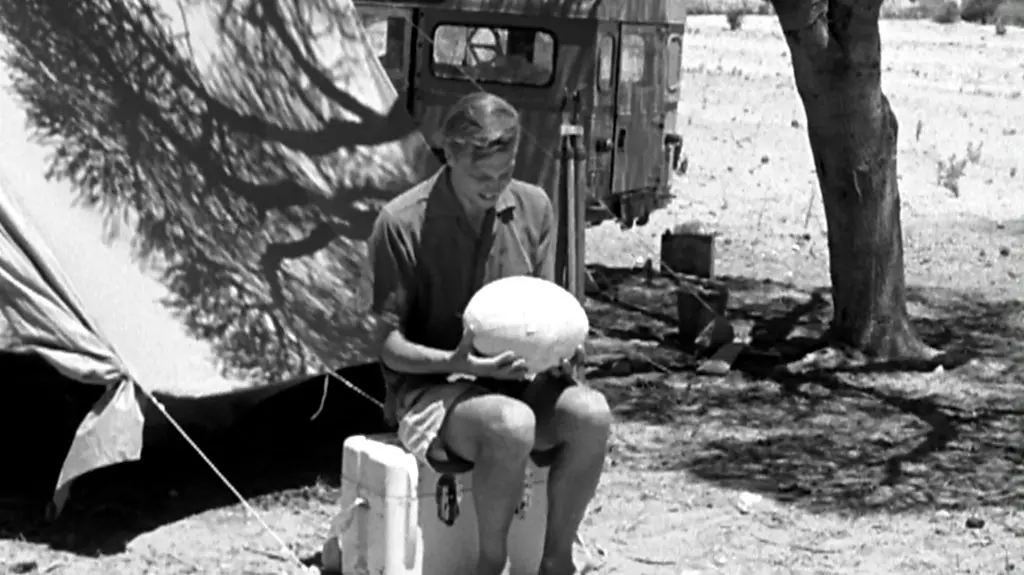
In the 1960s, Sir David Attenborough set out on an expedition to Madagascar that would lead to one of the most remarkable natural history discoveries of his career. The object at the center of the story was not a living creature, but a broken eggshell—fragments of a giant egg that, when pieced together, revealed an astonishing secret.
Key facts
- David Attenborough traveled to Madagascar in the 1960s.
- He found and assembled fragments of a giant egg.
- The egg belonged to the extinct elephant bird (Aepyornis maximus).
- The investigation deepened understanding of Madagascar's lost megafauna.
- The story became the basis of the documentary Attenborough and the Giant Egg.
A mysterious discovery
Attenborough had long been fascinated by the natural world, and Madagascar offered a treasure trove of weird and wonderful species. The island had broken away from Africa and India millions of years ago, allowing plants and animals to evolve in isolation. Its unique ecosystems were home to lemurs, chameleons, and other creatures found nowhere else on Earth.
During his expedition, Attenborough was shown a collection of bone fragments and eggshells. The sheer size of the shells instantly caught his attention. No living bird on Madagascar could lay an egg that large, and he realized that these remnants belonged to a species that had vanished from the island centuries earlier. By carefully fitting the broken pieces together, he reconstructed the outline of an enormous egg and became determined to learn more about the animal that had produced it.
What was the giant egg?
The egg belonged to the elephant bird, a group of flightless birds that once roamed Madagascar. The largest species, Aepyornis maximus, stood up to three meters tall and weighed as much as 500 kilograms. Despite its name, it was not related to elephants; the name likely arose from early European travelers who were told of a giant bird that was large enough to carry off an elephant.
Elephant bird eggs were extraordinary achievements of nature. They measured up to 30 centimeters in length and had a volume of around nine liters. To put that in perspective, one elephant bird egg would be equivalent to more than 150 chicken eggs. The shells were thick and durable, which is why fragments could survive for centuries in the island's sediments and caves.
Attenborough's reconstructed egg was not just an intriguing museum piece. It was a window into a lost world, a time when giant animals still roamed Madagascar and humans were relatively new arrivals on the island.
Madagascar's lost giants
The elephant bird was part of a remarkable assemblage of megafauna that existed on Madagascar until around 1,000 years ago. The island was also home to giant lemurs, pygmy hippos, and enormous tortoises. These animals thrived in the absence of many predators, but their isolation made them vulnerable to environmental change and human activity.
When people first settled in Madagascar, likely around 2,000 years ago, they cleared forests, hunted native animals, and introduced new species that competed with or preyed on native wildlife. The elephant birds, despite their formidable size, could not withstand these pressures. By the 17th century, they appear to have been driven to extinction, leaving behind only bones, eggs, and oral traditions that may have inspired legends.
The giant egg that Attenborough pieced together was therefore far more than a curiosity. It was evidence of a biological catastrophe, a reminder of how quickly fragile island ecosystems can collapse when human impacts are introduced.
Attenborough's enduring curiosity
The Madagascar expedition became one of the defining chapters in Attenborough's long career. He was already well known as a broadcaster and naturalist, but the search for the giant egg demonstrated his ability to weave scientific investigation with compelling storytelling.
Over the decades that followed, Attenborough would go on to present landmark series such as Life on Earth, The Living Planet, and Planet Earth, bringing the wonders of the natural world to audiences across the globe. Yet the giant egg continued to hold a special place in his memory. It represented the thrill of discovery, the mystery of extinction, and the importance of understanding the past to protect the future.
Scientific significance and modern research
Today, the elephant bird remains a subject of scientific fascination. Researchers have extracted ancient DNA from bones and eggshells, allowing them to study the evolutionary relationships of these giant birds. Some studies suggest that the elephant bird's closest living relatives are the kiwi and other ratites, although the details of their evolutionary history are still being refined.
Radiocarbon dating of elephant bird remains has helped scientists pinpoint when the species disappeared, while analyses of eggshell isotopes have provided clues about the birds' diet and habitat. The reconstructed egg that Attenborough assembled is part of a broader effort to understand how large-bodied animals respond to environmental and human-caused pressures.
The egg has also become a symbol of conservation. It reminds us that extinction is not a theoretical risk but a historical fact, and that the animals alive today face threats similar to those that wiped out the elephant bird. For Attenborough, the message was clear: the treasures of the natural world must be studied, celebrated, and protected.
A lasting legacy
The story of the giant egg continues to resonate with audiences, especially through the documentary Attenborough and the Giant Egg, which revisits his 1960s expedition and follows his quest to uncover the egg's origins. The film combines archival footage with new insights, showing how advances in science have deepened our understanding of Madagascar's lost giants.
For many viewers, the image of Attenborough holding fragments of a colossal egg is one of the most memorable moments in his long broadcasting career. It captures the curiosity and patience that have made him one of the world's most trusted voices in natural history.
More than half a century after the expedition, the egg remains a powerful artifact. It is a relic of a species that humans will never see alive, but also a reminder that the natural world is full of surprises waiting to be discovered. The fragments that Attenborough found on Madagascar were not just broken shells; they were pieces of a puzzle that would fascinate scientists and audiences for generations.
Source:Bbc News