

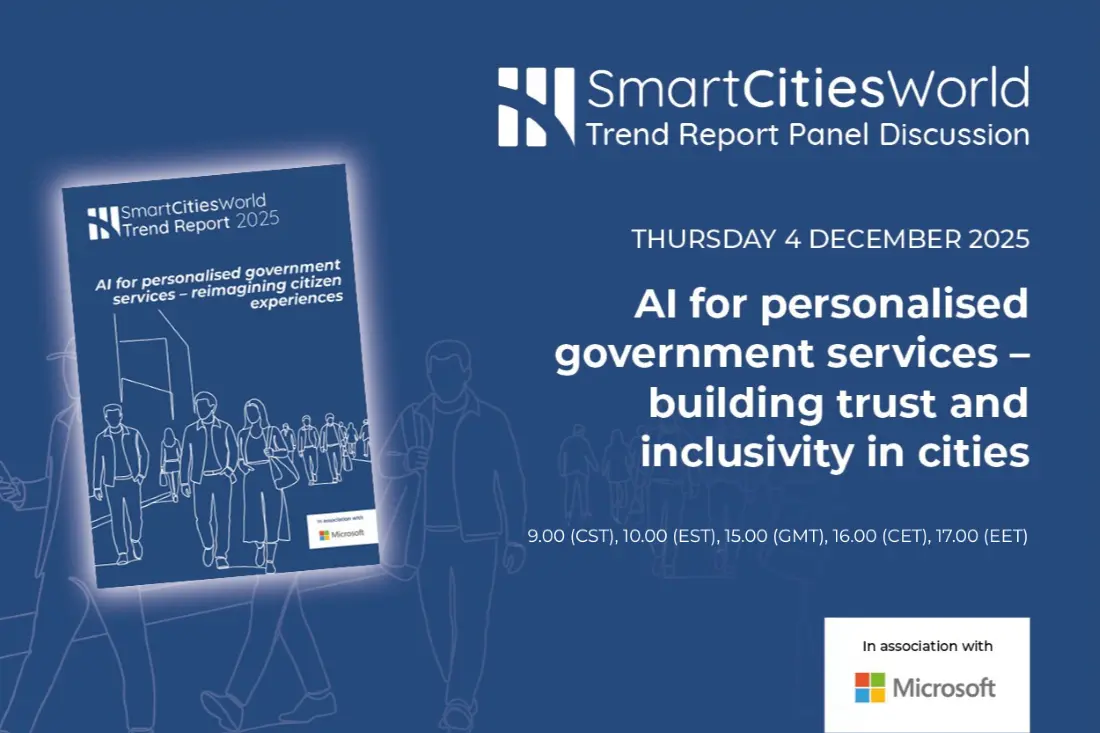
Artificial intelligence is increasingly becoming a cornerstone of modern urban governance, offering cities the potential to deliver highly personalised services to residents. However, the path to widespread adoption is fraught with challenges around trust, inclusivity, and ethical implementation. In a recent panel discussion moderated by industry experts at the SmartCitiesWorld Summit 2026, government leaders, technology providers, and academics gathered to explore how AI can be reliably integrated into mainstream local government operations over the long term.
The conversation underscored that the future of cities depends on the ability to connect people, data, infrastructure, and investment into coherent, place-based strategies. AI is not just a tool for automation; it is a means to reimagine the relationship between citizens and their governments. Personalised services—from tailored communication about local events to adaptive traffic management—can enhance user experience, but only if built on a foundation of trust.
One of the central themes was the importance of inclusive design. Cities must ensure that AI systems do not perpetuate existing biases or exclude vulnerable populations. This requires engaging diverse community stakeholders from the outset, using representative data sets, and implementing transparent algorithms. As panelists noted, trust is earned through demonstrated fairness and accountability, not simply through technical prowess.
Building Trust Through Data Governance
A key enabler of trustworthy AI is robust data governance. Cities must establish clear policies for data collection, storage, and use, ensuring that residents’ privacy is protected and that they have control over their personal information. Panelists highlighted the need for “privacy by design” principles, where data minimisation and anonymisation are standard practices. Additionally, cities should create public-facing dashboards that allow citizens to see how their data is being used and for what purposes.
The city of Helsinki was cited as a leading example, having developed an AI register that informs residents about every algorithm used in public services. This transparency measure has been credited with increasing public trust and encouraging more data sharing. Similar initiatives are emerging in other European cities, such as Amsterdam and Barcelona, where ethical AI charters guide municipal procurement and deployment.
Inclusivity as a Core Design Principle
For AI to serve all citizens, it must be accessible and relevant to diverse groups. This includes addressing the digital divide—ensuring that those without reliable internet access or digital literacy are not left behind. Panelists discussed the role of community centers, libraries, and mobile apps in bridging this gap. In Sunderland, for example, the city has partnered with local organisations to provide digital skills training and free Wi-Fi in public spaces, complementing its smart city initiatives.
Another dimension of inclusivity is language and cultural sensitivity. AI-powered chatbots and voice assistants should support multiple languages and dialects, and be designed to understand cultural contexts. The city of Dublin is innovating in this area by using natural language processing to analyse feedback from diverse communities, enabling more responsive service adjustments. These efforts aim to ensure that no resident feels alienated by technology-driven governance.
Strategic Procurement and Resilient Infrastructure
The panel also explored the role of procurement in building trusted AI systems. Sam Markey, Founder of Recurve, argued that strategic procurement is one of cities’ most underused tools for building resilience, local capacity, and long-term climate impact. By specifying requirements that prioritise ethical AI, data sovereignty, and vendor accountability, cities can shape the market and avoid lock-in to proprietary solutions. This approach also encourages innovation from smaller, local tech firms, fostering economic resilience.
Resilient infrastructure is a precondition for AI success. As cities become more dependent on digital systems, they must invest in secure, interoperable, and future-proof networks. The transition from legacy streetlights to smart lighting is a prime example: cities like Los Angeles and Copenhagen are converting their lighting infrastructure into platforms for sensors and data collection, while managing cybersecurity risks. These projects demonstrate that AI deployment must be coupled with robust physical and digital infrastructure.
Applications in Transport and Public Services
Transport is one of the most promising areas for personalised AI services. As noted by Microsoft’s Katherine Flesh, the greatest opportunities will depend on strong data foundations, workforce readiness, and responsible governance. Cities are using AI to optimise traffic flow, predict maintenance needs, and provide real-time transit information tailored to individual commuters. In Singapore, an AI-driven system adjusts traffic signals based on pedestrian volumes and congestion patterns, reducing wait times and emissions.
Beyond transport, AI is being applied to social services, housing, and public health. For instance, the city of Barcelona uses machine learning to identify neighborhoods at risk of energy poverty and target assistance programs accordingly. Such applications not only improve efficiency but also generate greater citizen trust when data is used sociably and transparently.
Overcoming Challenges: Bias and Workforce Readiness
Despite the promise, significant hurdles remain. Algorithmic bias can reinforce historical discrimination, as seen in some criminal justice and housing allocation systems. Panelists stressed the need for continuous auditing, diverse development teams, and inclusive data sets. Cities must also invest in workforce training to ensure that civil servants can competently oversee AI systems. The digital skills gap within government is a major barrier to adoption, requiring targeted recruitment and upskilling programs.
The panel concluded with a call for systems thinking—viewing AI not as a standalone technology but as part of an interconnected urban ecosystem. Success will require collaboration across departments, private sector partners, and citizens. By focusing on trust, inclusivity, and resilience, cities can harness AI to truly improve the quality of life for all residents, while setting a global standard for responsible innovation.
Source:Smart Cities World News