

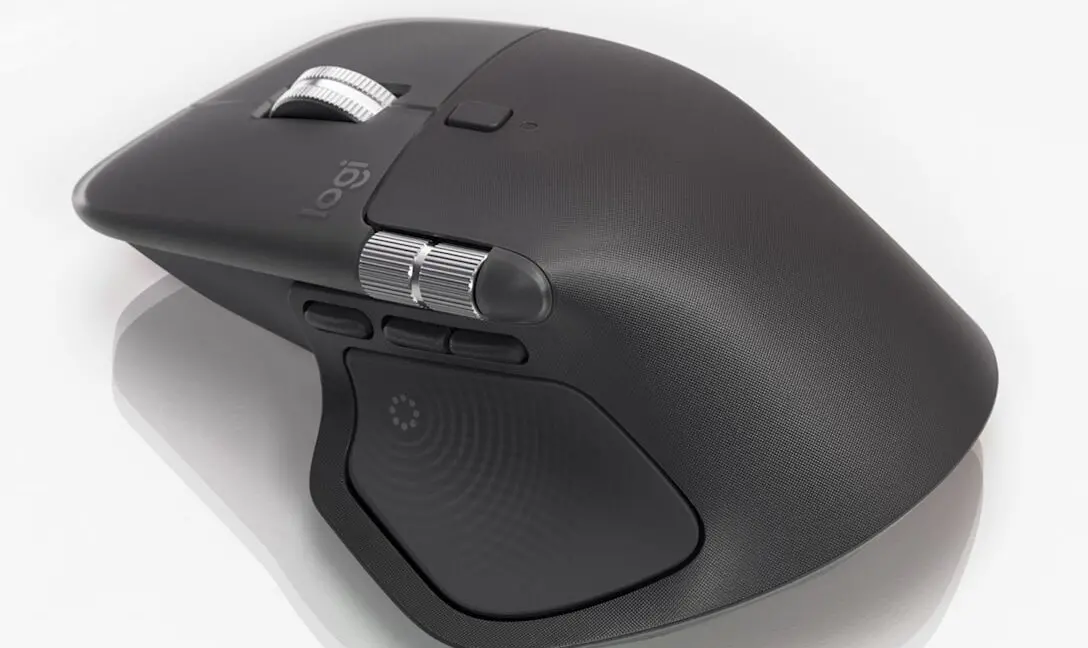
Logitech Faces Proposed Class Action Over Tariff Refunds
A proposed class action lawsuit filed in federal court in California accuses Logitech of keeping tariff-related price increases while also collecting refunds from the U.S. government. The complaint says customers should receive the proceeds, not the company. The case was filed Tuesday in the U.S. District Court for the Northern District of California, San Jose Division. The plaintiffs are SJK Development, a construction and residential housing builder in California, and Ala Awadalla, a California resident. Both say they bought Logitech mice at prices that had been increased because of tariffs.
The lawsuit seeks to recover money that Logitech allegedly extracted from American consumers as an offset for import tariffs that the U.S. Supreme Court has since declared unlawful. According to the complaint, Logitech now stands to be reimbursed by the federal government for those same tariffs. The plaintiffs argue that Logitech retained every dollar of the corresponding price increases it charged customers because of the illegal tariffs.
At the center of the dispute is a simple but potentially expensive question: when a company raises prices to cover a tariff, and the government later refunds that tariff, who should get the money? The plaintiffs say the answer is consumers. Logitech has not responded to a request for comment.
April 2025 Price Increases Covered Half of Logitech's Portfolio
In April 2025, Logitech raised prices on 51 percent of its portfolio. Some prices increased by as much as 25 percent. The complaint states that Logitech did not make a public announcement about the price hikes, and those increases are still implemented. The lack of a public announcement is a key part of the plaintiffs' narrative. They argue that the higher prices were tied to tariffs in communications with investors, even if customers did not receive a clear explanation at checkout.
The complaint highlights multiple times that Logitech executives told investors the price increases would offset, or had offset, the financial impact of the tariffs. In May, Matteo Anversa, Logitech's chief financial officer, said on a call that the positive impact of U.S. price actions and favorable foreign exchange more than offset the impact of tariffs and higher promotions. Anversa was discussing Logitech's fiscal fourth quarter of 2026. He noted that it was the highest level of profitability in the history of the company outside of the COVID peak.
For the plaintiffs, those statements matter. They suggest the company treated the price increases as a tariff offset. If the tariffs were later found unlawful and refunded, the plaintiffs say the offset should flow back to the people who paid it. Logitech's investors may have benefited from the higher prices and the refund, but the complaint argues that customers were left with neither a refund nor a credit.
Supreme Court Ruling and the IEEPA Tariffs
In February, the Supreme Court ruled that President Donald Trump imposed the IEEPA tariffs illegally. IEEPA stands for the International Emergency Economic Powers Act. The refund process is ongoing. The complaint notes that Logitech received a full refund of $61 million for the tariffs invalidated by the Supreme Court. That amount included $15 million during the first quarter of fiscal year 2027 and $46 million subsequent to quarter end.
The plaintiffs point to that refund as evidence of a double recovery. They allege Logitech has been enriched twice over at its customers' expense. First, according to the complaint, Logitech collected tariff-justified overcharges from the plaintiffs and the proposed class. Second, the government refunded the very duties those overcharges were represented to cover, with interest. The complaint says that absent relief, Logitech will continue to be enriched twice over.
The lawsuit is seeking a declaratory judgment that Logitech must give IEEPA tariff refund proceeds to customers. It also seeks to recover monies that Logitech extracted from American consumers as an offset for the tariffs. The complaint asserts that had Logitech not inflated its prices in the name of the unlawful IEEPA tariffs, the plaintiffs would have paid less for the same product. It adds that the plaintiffs received no refund, credit, or other compensation from Logitech corresponding to the tariff component of the price they paid.
The Double-Recovery Allegation in Detail
The complaint's core allegation is that Logitech has been enriched twice over. The first enrichment came from customers through higher prices that were justified by tariffs. The second came from the federal government through refunds of those same tariffs. The plaintiffs argue that this creates an unjust result. They say the company should not be allowed to keep both the customer surcharge and the government refund when the underlying tariff was invalidated.
The complaint quotes language that captures the claim: Logitech has been—and absent relief will continue to be—enriched twice over at its customers' expense: once by the tariff-justified overcharges collected from Plaintiffs and the Class, and again by the government's refund, with interest, of the very duties those overcharges were represented to cover.
The plaintiffs also claim that they bought Logitech mice at higher prices because of the tariff-related increases. They argue that the higher prices were not merely a general business decision. Instead, they say the company linked the increases to tariffs in its communications with investors. That link is central to the claim that customers should receive the refund proceeds. If the price increases were caused by tariffs, and the tariffs were illegal, then the refunds should not be retained by the company, according to the complaint.
Similar Lawsuits Against Microsoft, Nintendo, and Sony
Logitech is not alone. The lawsuit joins a handful of other consumer technology companies, including Microsoft, Nintendo, and Sony, that customers are suing over tariff refunds. Some customers feel entitled to refunds because these companies received government reimbursements. However, mass refunds like this could present financial and logistical challenges. Companies would need to identify which customers paid which prices, when they bought products, and how much of the price was attributable to tariffs. That could be difficult if the tariff component was not separately itemized.
For its part, Nintendo has argued that customers received exactly what they paid for. Nintendo also said there is nothing unjust about retaining money that it may receive from the government as tariff refunds. Nintendo filed a motion to compel arbitration. Logitech may also pursue arbitration, considering that its end-user license agreement has arbitration provisions. Arbitration clauses can prevent classwide litigation and force individual disputes into a private forum. If Logitech successfully compels arbitration, the proposed class action could be narrowed or dismissed as a class vehicle.
The outcome of these cases could influence how other companies handle tariff refunds. If courts find that companies must pass refunds to customers, many businesses could face new claims. If courts side with companies, consumers may have a harder time recovering any portion of tariff-related price increases. The legal question is not limited to Logitech. It touches any company that raised prices because of tariffs and later received a refund after those tariffs were ruled unlawful.
Legal Issues: Unjust Enrichment, Pass-Through, and Class Certification
The lawsuit raises several legal issues. One is unjust enrichment. The plaintiffs argue that Logitech would be unjustly enriched if it kept both the price increases and the government refunds. Another issue is pass-through. Tariffs are taxes on imports, typically paid by importers. Companies often pass those costs to consumers through higher prices. When the tariff is refunded, the question is whether the company must pass the refund back down the chain.
There is also the question of traceability. To recover, the plaintiffs may need to show that the prices they paid included a tariff component. Logitech did not publicly announce the price hikes, according to the complaint. That could make it harder for customers to know exactly how much of the price was due to tariffs. However, the complaint relies on statements to investors that the price increases offset tariff costs. Those statements could help the plaintiffs connect the price increases to the tariffs.
Class certification is another hurdle. The plaintiffs seek to represent a class of customers who bought Logitech products at higher prices. To certify a class, they must show common issues and typical claims. Logitech may argue that prices varied by product, retailer, region, and time. It may also argue that customers cannot prove they paid a specific tariff-related amount. The plaintiffs will likely counter that the common pricing decisions and investor statements make the case suitable for class treatment.
Arbitration is another major issue. The complaint notes that Logitech's end-user license agreement has arbitration provisions. If Logitech moves to compel arbitration, the case may shift out of court. Arbitration could limit the ability of customers to pursue a class action. Nintendo has already filed a motion to compel arbitration in its own case, suggesting that this strategy is being tested in parallel litigation.
What Logitech Has Said and What Remains Unclear
Logitech did not respond to a request for comment. The company has not publicly announced any plan to refund customers or lower prices after receiving tariff refunds. The complaint says the price increases remain implemented. That means customers are still paying the higher prices even after the Supreme Court invalidated the tariffs. The refund process is ongoing, and Logitech has already received a substantial amount.
The complaint seeks a declaratory judgment, not just damages. A declaratory judgment would establish that Logitech must give IEEPA tariff refund proceeds to customers. The plaintiffs also seek to recover the monies they say Logitech extracted from consumers through tariff-justified overcharges. If the court grants the requested relief, Logitech could be required to create a process for identifying affected customers and distributing refunds. That process could be complex and expensive.
For now, the case is in its early stages. The filing was made in the San Jose Division of the Northern District of California. The plaintiffs are a California construction and residential housing builder and a California resident. Both bought Logitech mice at higher prices, according to the complaint. The proposed class would likely include other customers who bought Logitech products after the April 2025 price increases. The court will decide whether the case can proceed as a class action and whether the claims survive any motions to dismiss or compel arbitration.
The proposed class action remains pending in the San Jose Division of the Northern District of California.
Source:Ars Technica News