

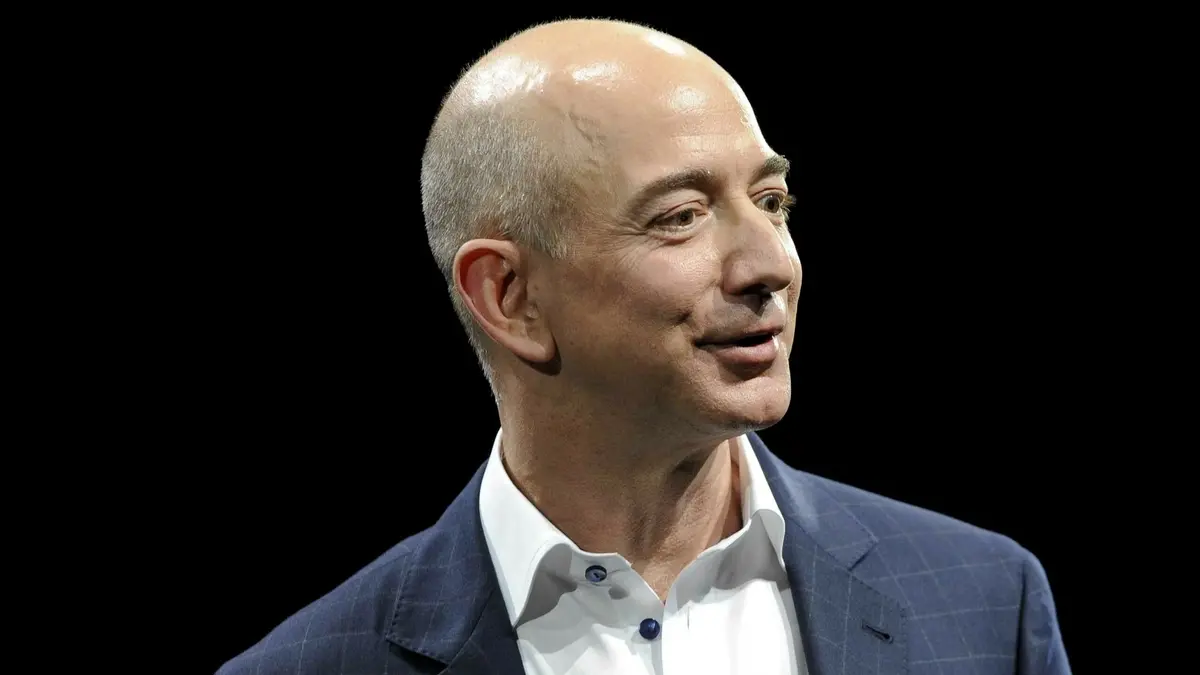
At the VivaTech 2026 conference in Paris, Jeff Bezos, founder of Amazon and Blue Origin, delivered a strikingly optimistic forecast about the impact of artificial intelligence on the job market. While public anxiety over AI-driven job displacement remains high, Bezos argued that the real problem will be a shortage of workers, not an excess. He claimed that AI will unlock unprecedented creative potential, allowing countless ideas to be transformed into real products and services, thereby generating a massive demand for talent.
Bezos's logic hinges on a simple premise: current innovation is constrained not by a lack of ideas, but by the limitations of tools and production capacity. Many promising concepts never come to fruition because they are too complex, expensive, or time-consuming. AI, he asserted, will drastically compress the cycle from idea to execution. This acceleration will spark an explosion of new ventures, products, and industries, each requiring engineers, designers, technicians, and entrepreneurs. The ultimate bottleneck, Bezos claimed, will be human imagination rather than the ability to build.
Prometheus: Bezos’s $12 Billion Bet on AI for Physical Goods
To back his vision, Bezos highlighted his newest venture: a startup called Prometheus, which has already raised $12 billion in funding. Unlike many AI companies that focus on large language models, Prometheus aims to develop AI systems specialized in physics and engineering. The goal is to help engineers design and manufacture physical objects—such as rocket engines or complex machinery—much faster than today’s methods allow. Bezos emphasized that creating a tangible product requires a form of intelligence that cannot be learned solely from internet text; it demands an understanding of real-world constraints and material properties.
Prometheus represents a significant shift in Bezos’s post-Amazon focus. Previously, he has concentrated on space exploration through Blue Origin and media through The Washington Post. Now, he is channeling resources into industrial AI, believing that this technology will revolutionize manufacturing and construction. The startup’s name itself evokes the Titan who brought fire to humanity—a metaphor for AI as a tool that empowers human creativity. Bezos’s investment signals his conviction that the next wave of innovation will come from merging AI with the physical world.
The Context: Public Fear vs. Bezos’s Optimism
Bezos’s remarks run counter to widespread fears about automation. A recent Reuters/Ipsos poll found that half of Americans worry that AI will threaten their jobs, and numerous studies predict significant job displacement across many sectors. However, Bezos contends that these fears mirror historical reactions to earlier technological shifts. The Industrial Revolution, the advent of computers, and the rise of the internet all initially sparked fears of mass unemployment, yet each ultimately created more jobs than it destroyed. Bezos believes AI will follow the same pattern, but on an accelerated timeline.
He argued that AI will not simply replace workers; it will augment them. By handling repetitive tasks and providing intelligent design assistance, AI will free people to focus on higher-level creative and strategic work. This, in turn, will open up entirely new categories of employment that are hard to imagine today. For instance, the field of prompt engineering, AI ethics, and robot coordination barely existed a few years ago. Bezos predicts that the coming decade will see the emergence of roles such as “AI-assisted inventor” or “physical product ideator.”
Critics, however, caution that Bezos’s perspective may be colored by his immense wealth and distance from the average worker’s daily challenges. Prosperity is easier to preach when one commands a net worth of over $200 billion. Skeptics argue that the transition could be deeply disruptive, especially for workers in industries like retail, logistics, and white-collar administration, where AI is already replacing tasks. They stress the need for robust retraining programs, social safety nets, and educational reforms to ensure that the promised opportunities are accessible to all, not just the highly skilled or well-connected.
Bezos’s Historical Views on Technology and Work
This is not the first time Jeff Bezos has offered a contrarian view on automation. In previous interviews and shareholder letters, he argued that Amazon’s use of robots in warehouses actually increased employment by enabling the company to expand its operations. He pointed to the fact that Amazon employs over a million people worldwide, many in roles that did not exist a decade ago. “We need to be careful not to overestimate the speed of change,” he once said, “and to underestimate the human capacity to adapt.”
Bezos’s vision for Prometheus also reflects his long-standing interest in space travel and advanced manufacturing. Blue Origin, his rocket company, has invested heavily in 3D printing and automated assembly. Bezos believes that AI can help design spacecraft that are lighter, more efficient, and cheaper to produce. He has often spoken about his desire to “move heavy industry off Earth” to preserve the planet, a vision that would require massive advancements in AI-driven manufacturing.
The announcement at VivaTech also sparked discussion about the role of government in managing the transition. Some policymakers have begun exploring universal basic income or stricter regulation of AI. Bezos, however, advocates for a laissez-faire approach, arguing that the market will naturally adjust. He encourages governments to invest in education, particularly in STEM fields and creative disciplines, to prepare the workforce for a world where AI handles routine tasks.
Implications for Education and Training
If Bezos’s prediction holds, the demand for workers with skills in AI, engineering, and creative problem-solving will skyrocket. This implies a major shift for educational institutions. Traditional curricula may need to incorporate more interdisciplinary training, combining technical expertise with design thinking and entrepreneurship. Coding and data literacy are likely to become as fundamental as reading and math. At the same time, lifelong learning will become essential, as workers will need to continuously update their skills to collaborate effectively with evolving AI tools.
Bezos also sees an opportunity for small businesses and individuals. With AI-powered design tools and online manufacturing platforms, a single entrepreneur could develop and produce a product that once required a large team and factory. This democratization of invention could lead to a wave of grassroots innovation, particularly in sectors like personalized medicine, sustainable energy, and custom electronics. The labor shortage Bezos predicts may therefore be most acute in roles that bridge creativity and technical implementation—people who can ask the right questions and guide AI toward useful outputs.
Ultimately, the debate over AI’s impact on employment is far from settled. But Jeff Bezos has staked his reputation and billions of dollars on the belief that AI will be a net positive for the workforce. Whether his projection becomes reality depends on how quickly society adapts—and whether the benefits are shared broadly or concentrated among a few. For now, his message at VivaTech 2026 serves as a provocative counterpoint to the prevailing narrative of fear.
Source:Génération NT News