

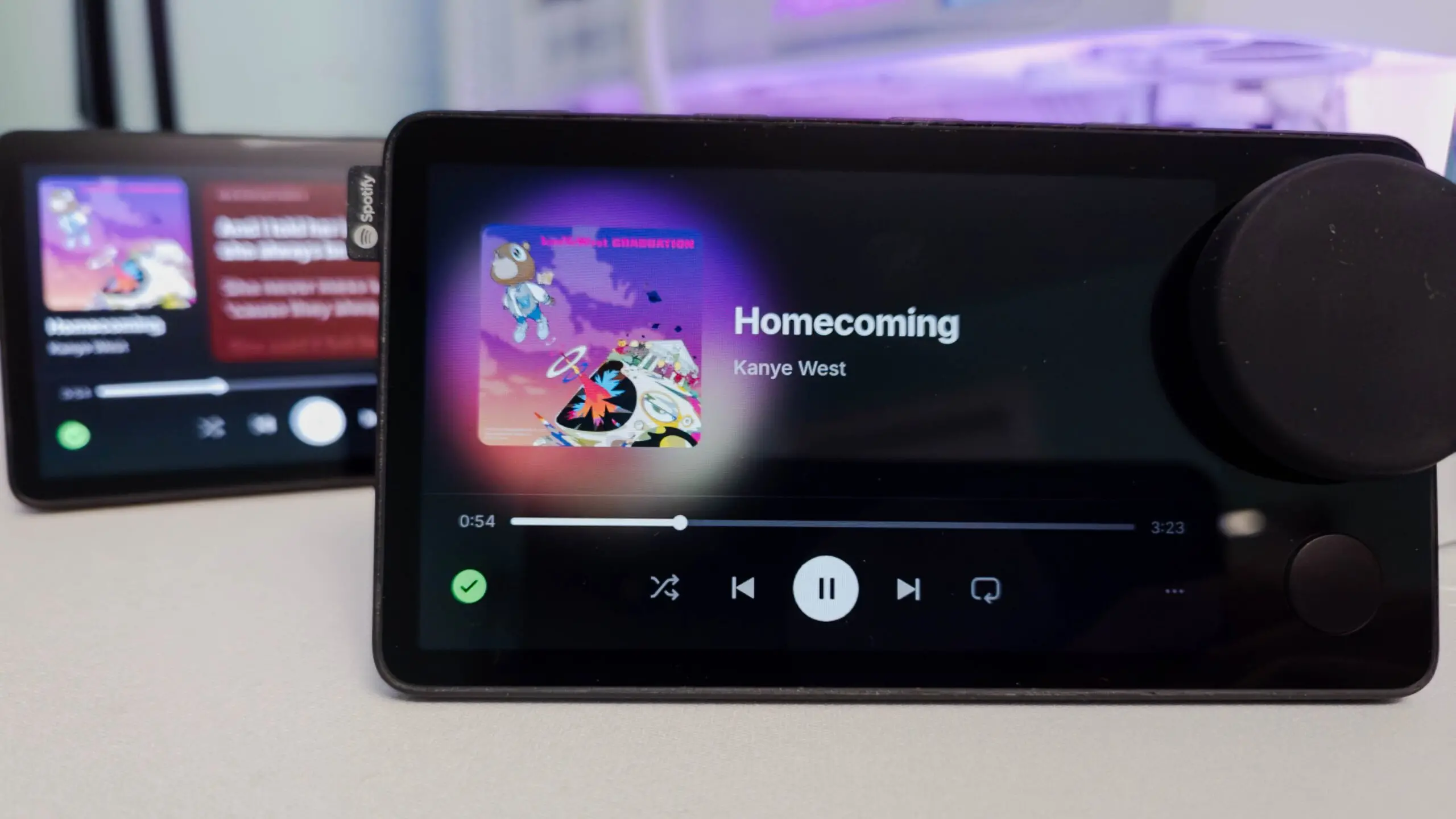
Back in 2021, Spotify made a bold move into the hardware space by launching the Spotify Car Thing, a dedicated streaming device designed for vehicles. Unlike smartphones or aftermarket infotainment systems, Car Thing was purpose-built to make Spotify access easier while driving. It featured a touchscreen, a large physical knob, and a set of preset buttons that allowed drivers to quickly select playlists, podcasts, or albums. The device was marketed as an affordable and simple solution for older cars that lacked built-in smartphone integration like Android Auto or Apple CarPlay.
For a time, Car Thing seemed like a clever niche product. It offered a streamlined, focused Spotify experience without requiring drivers to fiddle with their phones. However, Spotify eventually decided to discontinue the hardware. In late 2024, the company turned off the servers that powered Car Thing, effectively bricking every unit in existence. Without those servers, the device could no longer authenticate users, retrieve streaming data, or even perform basic functions. Owners were left with a small piece of plastic and electronics that had no purpose.
The unexpected death of a niche gadget
Spotify's decision to kill Car Thing did not come without warning. The company had already stopped selling the device in 2022, citing supply chain issues and lower-than-expected demand. But the server shutdown in 2024 came as a shock to many users who had invested in the hardware. Some had purchased Car Thing at retail, while others received it as a promotional item. Regardless of how they acquired it, the result was the same: their devices became unusable overnight.
The bricking of Car Thing also raised broader questions about the longevity of connected hardware. In an era where more gadgets rely on cloud services, the risk of sudden obsolescence is real. Consumers were reminded that they do not truly own the software on their devices, and that companies can revoke functionality at any time. The open source community, however, saw this as an opportunity rather than a loss.
Open source resurrection efforts
Almost immediately after the Car Thing shutdown, developers began exploring ways to keep the hardware alive. Forums and social media channels lit up with discussions about jailbreaking, custom firmware, and alternative operating systems. Some developers pointed out that the hardware inside Car Thing was quite modest, featuring a low-end processor and limited memory. This made full-fledged Linux distributions or Android builds difficult to port. Still, several projects emerged, each with its own approach.
Some projects focused on turning Car Thing into a generic Spotify remote using a web browser or custom client. Others attempted to repurpose the device as a smart home controller, a weather display, or a dashboard for various online services. But many of these earlier efforts were incomplete, requiring complex setup or lacking reliability. The Car Thing community kept waiting for a polished, user-friendly solution.
Introducing Mira: a new lease on life
This week, a new open source project called Mira appeared on GitHub, and it has captured the attention of Car Thing owners. Mira aims to restore a significant portion of the original Car Thing functionality, with a laser focus on Spotify. Unlike broader attempts to transform the hardware into a general-purpose Android device, Mira hones in on what Car Thing did best: providing a dedicated Spotify controller for your car or home.
According to the project's GitHub page, Mira is designed to work with your existing Spotify account. Once installed and linked, it allows you to control Spotify on your connected devices, be it a phone, tablet, computer, or smart speaker. The interface takes full advantage of Car Thing's physical controls, including the large knob, the preset buttons, and even gesture controls on the touchscreen. This means that the familiar tactile experience from the original device is preserved, but now powered by an independent open source implementation.
Features that breathe new life into old hardware
Mira is not trying to replace your phone or your car's infotainment system. Instead, it positions itself as a remote control for Spotify. It can display album art and synchronized lyrics, making it a useful companion for long drives. The interface is clean and minimal, reducing distractions while driving. Additionally, Mira includes basic voice control for playback commands. This may not be as robust as a full-fledged digital assistant, but it covers the essentials like play, pause, skip, and volume adjustment.
The project also supports preset buttons, which were a hallmark of the original Car Thing. Users can assign their favorite playlists, albums, or podcasts to these buttons for one-press access. The large knob allows for scrolling through menus and adjusting volume, just like the factory firmware did. Gesture controls, such as swiping on the touchscreen, are also supported, enabling quick navigation without taking your eyes off the road for too long.
How to get Mira running on your Car Thing
The installation process for Mira appears to be in line with other community-driven projects. Interested users will need to connect their Car Thing to a computer and flash the custom firmware. The GitHub repository likely includes detailed instructions, and the developer has provided pre-built binaries or source code for those who prefer to compile themselves. Because this is open source, the project is free to use, though users may need to enable developer mode and install necessary drivers.
Once Mira is installed, the device will no longer rely on Spotify's defunct Car Thing servers. Instead, it communicates directly with Spotify's Web API or through a local connection to your phone. This architecture ensures that the hardware remains functional even if future changes to Spotify's ecosystem occur. It also means that Mira could potentially be adapted to work with other music streaming services in the future, should the developer or community choose to expand its scope.
The bigger picture: right to repair and e-waste
The revival of Car Thing through projects like Mira highlights a growing movement in consumer electronics: the right to repair and the fight against planned obsolescence. When a company discontinues a product and shuts down its servers, it effectively creates e-waste unless independent developers step in. By reverse engineering and creating custom software, the open source community extends the lifespan of hardware that would otherwise end up in a landfill.
Car Thing is just one example among many. Similar efforts have been made to rescue smart speakers, home hubs, and even game consoles that lost official support. These projects often operate in a legal gray area, as they may involve circumventing digital rights management or reverse engineering proprietary protocols. However, they also serve the public interest by reducing waste and giving consumers more control over devices they purchased.
What the future holds for Car Thing and Mira
Mira is still in its early stages, and it remains to be seen how widely it will be adopted. The project's GitHub page suggests that it is reasonably full-featured, but there may be bugs and edge cases that need ironing out. The developer encourages feedback from the community, and the open source nature of the project means that other programmers can contribute improvements. As more Car Thing owners dust off their devices and try Mira, the project will likely evolve and mature.
For those who have kept their Car Thing in a drawer or garage, now is a good time to consider giving it a second chance. With Mira, the device can once again serve as a functional Spotify remote, even if it is no longer an official product. The experience may not be identical to the original software, but it offers a solid and growing set of features that could enhance your listening experience.
The story of Car Thing is a reminder that technology is not always permanent. Products can be discontinued, services can be shut down, and hardware can become obsolete. But it also shows that passionate communities and dedicated developers can push back against these forces. By keeping abandoned devices alive, they not only save money for consumers but also preserve the joy that comes from using a well-designed piece of hardware. If you happen to own a Car Thing, you no longer have to let it gather dust. Mira offers a path back to a working, useful life — and it is just a flash away.
Source:Android Authority News