

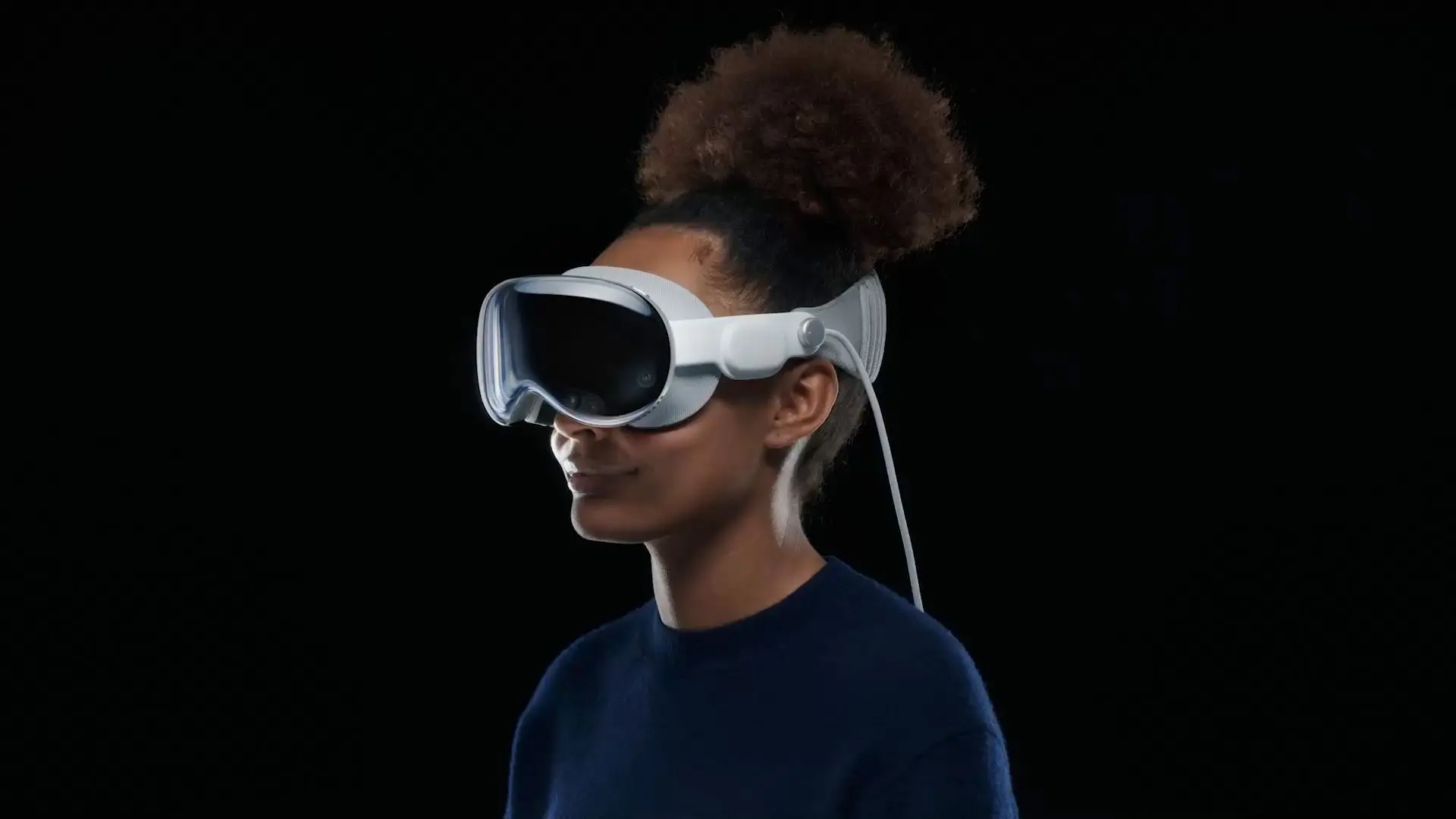
Apple Vision Pro: An Overview
Apple Vision Pro represents Apple's first major new product category since the Apple Watch. Launched in February 2024 with an M2 chip and refreshed in October 2025 with an M5 chip, the Vision Pro is a mixed reality headset that combines augmented reality and virtual reality in a single device. Apple prefers to call it a spatial computer, emphasizing its ability to blend digital content with the physical world. The device is designed to be controlled by your eyes, hands, and voice, eliminating the need for physical controllers.
The new M5 Vision Pro starts at $3,699 and is available in select countries worldwide. It brings improved performance, a more comfortable Dual Knit Band, higher refresh rates, and better battery life compared to the original model. However, a significant price increase in June 2026, driven by a global memory crisis, has made the headset even more of a luxury purchase.
Should You Buy the Vision Pro?
With a $3,699 price tag, the Apple Vision Pro is prohibitively expensive for many consumers. Reviews have repeatedly noted that it does not easily fit into existing workflows for most people, and some early adopters have even regretted their purchase. That said, the Vision Pro is excellent for watching movies, viewing 3D videos, and using as a large external display for a Mac. If your primary interest is high-end content consumption and spatial computing experimentation, this device is remarkable.
The headset weighs more than 1.3 pounds, and many users report fatigue after extended use. The new Dual Knit Band, introduced with the M5 model, improves comfort with a second strap that goes over the top of the head. It uses breathable, stretchy fabric and counterweights to distribute weight more evenly. But the external battery pack is still an inconvenience, and travel is difficult, especially when using Apple's dedicated Travel Case.
Anyone considering buying a Vision Pro should try it at an Apple Store and do substantial research before committing. The Vision Pro remains an impressive feat of engineering, but it has a limited number of dedicated apps and games. For movie watching and Mac display use, it is superb; as an all-around computing device, it still feels like a first-generation product. Apple refreshed the device with the M5 chip in October 2025, which makes now a reasonable time to buy if you are set on purchasing one. Another hardware update is not expected for at least two years, and development of a next-generation headset has reportedly been paused.
What Is Apple Vision Pro?
Apple Vision Pro is Apple's augmented and virtual reality headset. Although it looks like a pair of ski goggles, Apple resists the term headset and positions it as a spatial computer. The device displays augmented reality content overlaid on the world around you, but the headset is not see-through. Instead, external cameras capture your surroundings and render them on internal displays. For fully virtual experiences, the cameras can be turned off, and you can be placed entirely inside an immersive environment. A Digital Crown lets you adjust your level of immersion, ranging from a full view of your real surroundings to a completely virtual space.
The design features a single piece of three-dimensionally formed laminated glass on the front, a curved aluminum alloy frame, and a soft Light Seal that magnetically attaches to the frame. The Light Seal conforms to your face to block out light and is available in multiple sizes to fit different head shapes. Two Audio Straps with speakers sit at the sides, delivering Spatial Audio. The headset's headband is detachable: the original Vision Pro came with a Solo Knit Band, but the M5 model includes a softer, more comfortable Dual Knit Band with a top strap and a Fit Dial for tightening.
Display and EyeSight
Inside the Vision Pro are two custom micro-OLED displays, each delivering over 4K resolution to each eye, for a total of 23 million pixels. Apple says this is more pixels than a 4K TV. The M5 chip improves the visual experience by rendering 10 percent more pixels, resulting in sharper, more detailed content. The refresh rate has also been increased to up to 120Hz, reducing motion blur and making content appear smoother.
The external EyeSight display is one of the Vision Pro's signature features. It projects an image of your eyes onto the front glass, letting people nearby see whether you are fully immersed or still aware of your surroundings. EyeSight also alerts others when you are recording video, helping to prevent covert recording.
Cameras, Sensors, and Navigation
The Vision Pro is packed with 12 cameras and five sensors. Two high-resolution cameras transmit over a billion pixels per second to the displays, supporting the augmented reality passthrough. Additional cameras and sensors handle head tracking, hand tracking, and real-time 3D mapping. Infrared flood illuminators improve hand tracking in low light, and LiDAR scanners help sense depth and object location.
There are no physical controllers. You navigate by looking at items and tapping your fingers together to select them. Eye tracking uses infrared cameras and LED lights inside the headset to understand exactly where you are looking. Hand gestures are detected even when your hands are resting in your lap. Voice commands work throughout the system. Bluetooth keyboards, mice, trackpads, and game controllers can also be connected for more traditional input.
Optic ID
The same eye-tracking hardware powers Optic ID, an iris recognition system similar to Face ID. Each person has a unique iris pattern, and Optic ID can be used to unlock the device, authenticate purchases, and replace passwords. It is designed to be as secure as Face ID and Touch ID.
3D Camera
The Vision Pro includes an external camera capable of capturing 3D photos and 3D videos, which Apple calls spatial photos and spatial videos. The camera is controlled with the top button on the headset. When recording, the EyeSight display shows an animation to make it clear to others that video is being captured. Existing 2D photos can be given depth and viewed in 3D.
Audio and Connectivity
Speakers are built into the audio straps on each side of the headset. These dual-driver pods support Spatial Audio and can adapt sound to the acoustics of a room. Six microphones are used for phone calls, video calls, and Siri commands. For better audio, the Vision Pro pairs with AirPods. The USB-C AirPods Pro 2 and AirPods Pro 3 support lossless audio with ultra-low latency when connected to the Vision Pro.
The Vision Pro supports Wi-Fi 6 on the 2.4GHz and 5GHz bands, but it does not support Wi-Fi 6E. It also works with Bluetooth accessories for text input and game controllers.
Processors and RAM
Apple Vision Pro is powered by two Apple silicon chips. The M5 chip is the same class of chip used in MacBook Pro, and it runs the visionOS operating system, executes computer vision algorithms, and provides graphics. Built using third-generation 3-nanometer technology, the M5 has a 10-core CPU and a 10-core GPU. Apple says the CPU delivers the world's fastest core performance and is up to 50 percent faster in AI workloads than the M2. The 16-core Neural Engine accelerates built-in AI features, while unified memory bandwidth is now 153GB/s.
The R1 chip is exclusive to the headset. It processes input from all cameras, sensors, and microphones, streaming images to the displays in as little as 12 milliseconds for a virtually lag-free view of the world. The Vision Pro includes 16GB of RAM and is available with 256GB, 512GB, or 1TB of storage. The 256GB base model is priced at $3,699, with higher storage options costing more.
Battery Life
The Vision Pro does not have a built-in battery. It uses an external battery pack that clips to your waist or pocket via a braided cable. The M5 Vision Pro offers improved battery life: up to three hours when watching video and up to 2.5 hours during general use, which is half an hour longer than the M2 version. Battery packs can be swapped for more power, but the device ships with a single pack. When connected to a power outlet, the Vision Pro can be used indefinitely. Apple says the battery pack can interfere with cardiac pacemakers and other medical electronics, so keep it away from such devices.
visionOS and Software
visionOS is the operating system built for Vision Pro. It has a three-dimensional interface with a Home View containing apps like Mail, Messages, Music, Safari, Photos, and more. Apps can be placed anywhere in the space around you, resized, and arranged to create an infinite canvas. You can use a virtual keyboard, dictation, or Bluetooth accessories for text input.
Windows can be shown in your actual surroundings or in a virtual Environment that replaces the real world. The Digital Crown controls immersion. FaceTime is redesigned for Vision Pro: other participants appear in large tiles, while Vision Pro wearers are represented by a digital Persona that mirrors their face and hand movements in real time.
visionOS 26
The current public release is visionOS 26, which debuted in September 2025. It added persistent widgets, improved Personas, spatial scenes for 2D photos, and a Safari feature that lets users scroll using only their eyes. Users can now share Vision Pro experiences with other Vision Pro owners in the same room and view their iPhone while wearing the headset. A Jupiter Environment was also added.
visionOS 27 and Siri AI
visionOS 27 is the next major software update, arriving in September. It introduces Siri AI, a generative AI assistant that behaves like ChatGPT and Claude. Siri can hold conversations, answer complex questions, see what you're looking at, and take action inside apps. A new floating bubble interface lets you pin Siri anywhere in your space. Other features include Visual Intelligence, Write with Siri, an overhauled Passwords app with AI-powered password changes, and support for immersive web experiences in Safari.
The M5 Vision Pro will support a custom voice for Siri, and Apple is bringing several accessibility features to visionOS 27, including face gestures for taps, Dwelling Control for eye selections, and Vehicle Motion Cues to prevent motion sickness.
Mac Integration
One of the Vision Pro's strongest features is its integration with the Mac. You can use the headset as a private, portable 4K display. With visionOS 2.2 and later, Wide and Ultrawide modes offer even more screen space, with the Ultrawide mode roughly equal to two 4K displays side by side. The Mac screen appears in the virtual space, and you can use your Mac's keyboard, trackpad, or mouse. You can also open Vision Pro apps alongside the Mac mirroring experience.
Buying the Vision Pro
The M5 Vision Pro is available from Apple's online and retail stores in Australia, Canada, China, France, Germany, Hong Kong, Japan, Korea, Taiwan, the UK, the UAE, and the US. During ordering, Apple requires Face ID scan to determine the correct Light Seal size and headband fit. Zeiss reading lenses cost $99, while custom prescription lens inserts cost $149. A valid prescription from a US eye care professional must be uploaded for custom inserts.
In the box are the Dual Knit Band, Light Seal, two Light Seal Cushions, a front Cover, a Polishing Cloth, an external battery, a USB-C charging cable, and a USB-C power adapter. If you have an earlier M2 Vision Pro, you cannot trade it in toward an M5 model because Apple is not accepting Vision Pro trade-ins.
Medical Warnings
Apple warns that certain medical conditions could be aggravated by using the Vision Pro. People with heart conditions, migraines, dizziness, vision problems, psychological conditions, inner ear issues, skin allergies, seizures, or balance problems should consult a health care provider before use. Pregnant individuals should be cautious because of a potential increased risk of nausea or loss of balance.
The Vision Pro and battery pack can also interfere with nearby electronics like pacemakers, hearing aids, and defibrillators. Apple advises keeping the headset and battery away from these devices.
What's Next?
Apple is reportedly pausing development of the next-generation Vision Pro to focus on a pair of AI smart glasses similar to Meta Ray-Bans. These smart glasses are expected to include speakers, microphones, cameras, and a built-in AI assistant, but no display. Ming-Chi Kuo predicts a launch in 2027, while Bloomberg's Mark Gurman believes they could arrive as early as late 2026. Apple is also working on a cheaper, lighter enclosed headset, but that is not expected until late 2028 or 2029 at the earliest.
Longer term, Apple is exploring AR smart glasses with in-lens displays and has tested using the Vision Pro to detect mental health issues like depression and anxiety. Future devices could include lower-cost glasses, display-equipped AR glasses, and perhaps AR contact lenses in the 2030s. For now, the Apple Vision Pro remains the most advanced spatial computer on the market, but it is a product for enthusiasts and early adopters, not the average consumer.
Source:MacRumors News