

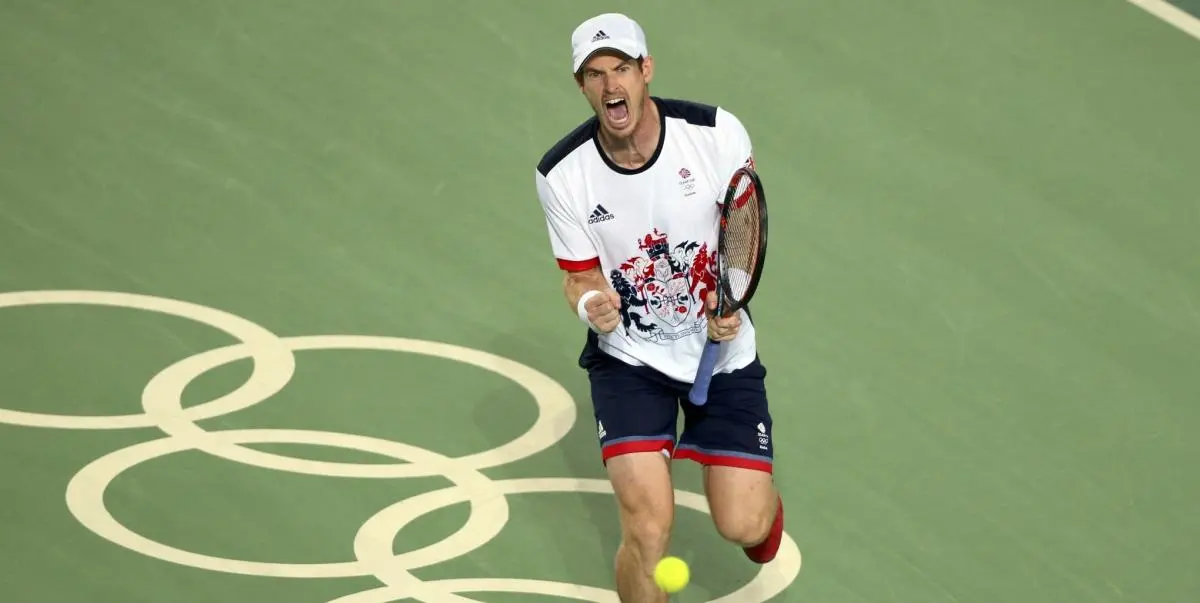
Andy Murray etched his name deeper into the annals of tennis history on Sunday, August 14, 2016, by defeating Argentina's Juan Martin Del Potro 7-5, 4-6, 6-2, 7-5 in a pulsating Olympic gold medal match at the Rio de Janeiro Tennis Centre. With this victory, Murray became the first tennis player—male or female—to win back-to-back Olympic singles gold medals, having previously triumphed on home soil at London 2012.
The final, which lasted exactly four hours and two minutes, was a testament to the grit, resilience, and sheer quality of both competitors. While Murray entered the match as the world No. 2 and clear favorite, Del Potro—ranked No. 141 after a series of debilitating wrist injuries—played with the freedom and audacity of a man who had already defied the odds by eliminating Novak Djokovic in the first round and Rafael Nadal in the semifinals. The Brazilian crowd, starved of a home champion and enamored with Del Potro's underdog story, transformed the venue into a cauldron of noise, urging the giant Argentine forward with every thunderous forehand.
Murray's path to the gold medal had been relatively smooth compared to Del Potro's gauntlet. The Scot dropped just one set in his first five matches, against Italy's Fabio Fognini in the quarterfinals, and cruised past Kei Nishikori in the semifinals. Yet from the very first point of the final, it was clear that Del Potro would offer a far sterner test. The Argentine, once ranked No. 4 in the world and a US Open champion in 2009, had endured a nightmare three years. After undergoing three wrist surgeries—two on his left wrist, one on his right—many doubted he would ever return to the elite level. But in Rio, he rediscovered the devastating form that had once made him a Grand Slam champion. His forehand, widely regarded as one of the most explosive shots in the game, was firing on all cylinders, and his backhand, though often a target, held up remarkably well against Murray's relentless pressure.
The first set was a tense, high-quality affair. Both players held serve comfortably until 5-5, with Murray probing Del Potro's backhand and Del Potro trying to dictate points with his forehand. At 6-5, Murray earned his first break point of the set and converted it with a superb defensive lob that left Del Potro stranded at the net. The Scot served out the set 7-5, but the Argentine's fighting spirit was far from broken.
Del Potro responded by raising his level in the second set. He broke Murray's serve in the opening game after a long rally that ended with a backhand error from the Briton. Murray immediately broke back in the next game, but Del Potro's confidence was growing. The crucial moment came at 4-4, 15-40. Murray saved two break points with aggressive serves, but on the third, Del Potro lashed a forehand winner down the line that left Murray rooted to the spot. The Argentine then served out the set 6-4 to level the match, sending the crowd into a frenzy.
The third set saw Murray regain control. He broke early to lead 2-0 and never looked back, mixing up his play with drop shots and lobs to disrupt Del Potro's rhythm. The Argentine's energy seemed to dip slightly, perhaps a consequence of his grueling semifinal against Nadal, which had lasted three and a half hours. Murray took the set 6-2, moving within one set of the gold medal.
But Del Potro refused to buckle. The fourth set was a rollercoaster. The Argentine broke Murray's serve in the second game to lead 2-0, and then saved three break points in the next game to consolidate the lead. Murray, visibly frustrated, argued with the chair umpire over a line call. Yet he held his nerve, breaking back to level at 3-3. The momentum swung again as Del Potro broke for a 5-3 lead, serving for the set. But Murray, drawing on his immense mental strength, broke back to love, winning the game with two stunning passing shots. The crowd fell silent as Del Potro's opportunity slipped away. Murray then held serve to go up 6-5, and with Del Potro serving to stay in the match, the Scot played his best return game of the afternoon. He forced a match point at 15-40, and sealed victory when Del Potro netted a backhand. Murray collapsed to his knees on the clay, overcome with emotion.
This gold medal was more than just a personal triumph for Murray; it was a landmark moment for British tennis. After years of living in the shadow of Roger Federer, Rafael Nadal, and Novak Djokovic, Murray had established himself as one of the greatest players of his generation. His 2012 US Open victory had ended Britain's 76-year wait for a male Grand Slam champion, and his two Wimbledon titles—in 2013 and 2016—had cemented his place in the sport's pantheon. The Olympic golds, coming in back-to-back Games, added a unique layer to his legacy. No tennis player, male or female, had ever achieved such a double since tennis returned to the Olympics in 1988.
For Del Potro, the defeat was heartbreaking, but his performance in Rio was a triumphant return to the spotlight. He had arrived in Brazil with no expectations, his ranking so low that he needed wildcards to enter events. Yet he transformed into the story of the tennis tournament, captivating fans with his raw power and emotional resilience. His victories over Djokovic—the world No. 1—and Nadal—the King of Clay—were among the most stunning upsets in Olympic history. The silver medal he won that day would become a symbol of his indomitable will, and just a few weeks later, he would help Argentina win the Davis Cup for the first time in its history.
The match itself was a microcosm of everything that makes Olympic tennis special. Unlike the sterile atmosphere of many Grand Slam events, the crowd in Rio was uninhibited and passionate, oscillating between deafening roars for Del Potro and respectful silence during critical points. Murray, accustomed to being the underdog at Wimbledon, found himself in the unusual role of the establishment figure being felled by the popular challenger. Yet he handled the pressure with the professionalism that has defined his career. His defensive skills, often underestimated, were on full display as he repeatedly extended rallies until Del Potro's consistency wavered.
From a statistical perspective, Murray's triumph was built on his return of serve and his ability to neutralize Del Potro's forehand. He won 47% of points on Del Potro's second serve, compared to the Argentine's 38% on Murray's second serve. More crucially, Murray saved 12 of the 17 break points he faced, while converting 7 of his 16 opportunities. The final was the longest best-of-five-set match in Olympic tennis history, surpassing the 2008 gold medal match between Nadal and Fernando Gonzalez. It was also the first Olympic men's singles final to go four sets since 1992, when Marc Rosset beat Jordi Arrese.
The broader context of the Rio Olympics added to the match's significance. The tennis tournament had been plagued by rain delays, empty seats, and complaints about the slow surface, but the men's final provided a fitting climax. Murray's victory was one of the few occasions at these Games where a top seed justified his billing, as many other favorites had stumbled. It also marked the continuation of a golden era for British sport, with Murray joining athletes like Mo Farah, Jessica Ennis-Hill, and Bradley Wiggins in delivering iconic Olympic moments.
In the immediate aftermath, Murray said in his on-court interview: "It's incredible. This is the biggest win of my career. To win back-to-back gold medals is something I never thought I'd achieve. Juan Martin is an incredible competitor, and he made this match so difficult. I'm just so happy to come through." Del Potro, ever gracious despite his pain, praised Murray and thanked the fans: "Andy is a great champion. I tried my best, but he was too good today. The crowd was amazing, and I will never forget this week."
The Rio gold medal would prove to be the final peak of Murray's illustrious career. He would go on to reach No. 1 in the world later that year and win a third Grand Slam title at Wimbledon in 2016, but hip problems soon curtailed his mobility. Del Potro, meanwhile, would climb back into the top 5 in 2018 and win a silver medal at the 2018 Indian Wells Masters, before further wrist issues finally forced his retirement in early 2022. Their final at Rio remains a cherished memory for tennis fans, a reminder of the sport's capacity to produce drama, emotion, and history on the grandest stage.
Source:L'Équipe News