

Welcome to this week's technology roundup, where artificial intelligence continues to reshape everything from personal computing to cybersecurity. From Google Maps evolving into a full-fledged travel agent to Apple's newest hardware showing how always-on AI could change the way we work, the past few days have been packed with developments. Here are the headlines and key facts you need to know.
Google Maps and AI: A New Kind of Travel Agent
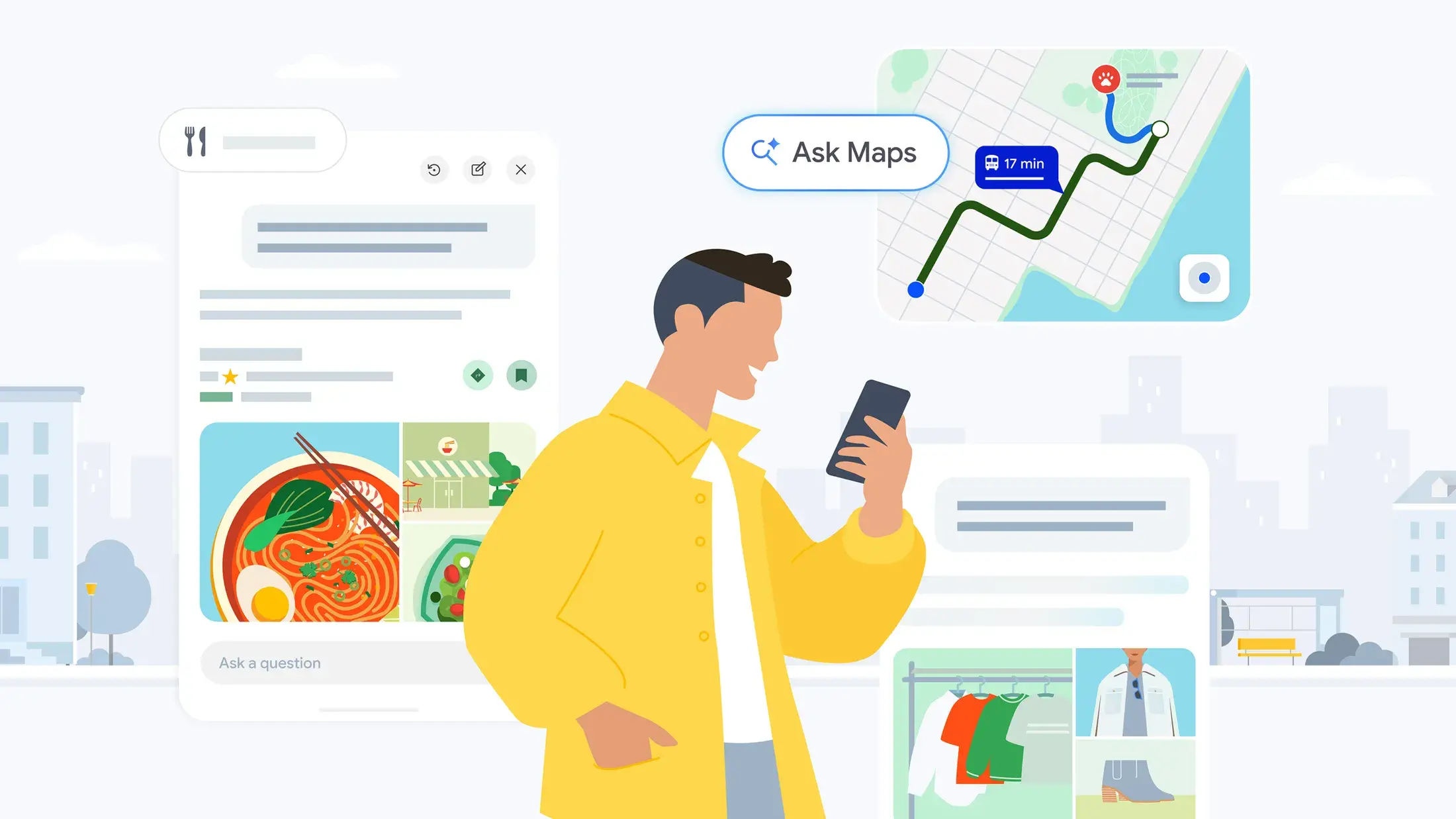
Google is weaving AI deeper into its mapping and search products. The company's AI Mode is transforming Google Search into an interactive travel planner, allowing users to order food and find hotel rooms directly through the interface. This means that instead of jumping between apps, users can ask Google to compare local restaurant options, place an order, or book a room—all in natural language.
The consumer report highlights that this is part of a broader effort to make AI useful in everyday scenarios. By integrating with Google Maps, the AI can tap into real-time data about businesses, availability, and pricing. For travelers, the convenience is obvious: a single search can handle everything from dinner reservations to overnight accommodation. However, the feature also raises questions about data privacy and the future of third-party booking platforms. With Google controlling more of the transaction, competitors may find it harder to survive.
Apple's Mac Mini and the Era of Always-On AI
Apple's new Mac mini is more than just a compact desktop computer. According to industry analysts, it is designed to keep AI models ready at all times, signaling a shift in personal computing. The hardware's efficient M4 chip and unified memory allow users to run large language models locally without draining power or generating excessive heat. This capability makes the Mac mini an ideal hub for always-on AI assistants that need to respond instantly.
The implications are significant. Instead of relying on cloud-based AI, users can keep sensitive data on-device, improving privacy and reducing latency. The Mac mini also supports multiple AI workloads simultaneously, from voice recognition to image generation. Apple's approach suggests that the future of computing may not be about bigger screens, but about silent, always-listening machines that anticipate our needs. Developers are already exploring ways to use the Mac mini as a personal AI server, connecting other devices to its processing power.
SpaceX's Louisiana Starbase: A $100 Billion Bet on the Stars
SpaceX has announced that its new Louisiana Starbase facility is ready for its first launch. Worth $100 billion, the site is another major investment in the company's mission to make life multiplanetary. The Louisiana facility will serve as a manufacturing and launch complex for Starship, the enormous rocket designed for missions to the Moon and Mars. This 'This Week in IT' segment highlights how the project could bring thousands of jobs to the region and reshape the aerospace industry.
The facility's location gives SpaceX additional launch capacity and easier access to certain orbital trajectories. With Texas already hosting Starbase, Louisiana adds redundancy and scale. Industry experts point out that the investment underscores the commercial space race, with private companies leading the way where governments once dominated. The first launch from Louisiana will test not only the rocket, but also the logistical systems that support it. If successful, it will mark another milestone in SpaceX's rapid expansion.
When Your iMessage Conversation Becomes a Privacy Risk
A viral quote sums it up: 'That's between you, me, and ChatGPT.' The concern is that every Apple iMessage conversation is now a potential privacy risk due to the integration of ChatGPT in Apple's ecosystem. Users can summon the AI chatbot directly in Messages, and the model may process conversation content to generate responses. Although Apple has emphasized on-device processing and user consent, privacy advocates warn that third-party AI services could store or train on sensitive exchanges.
The issue is especially acute for people who discuss medical, financial, or legal matters over iMessage. Even if interactions are encrypted in transit, the AI model at the receiving end could create logs. Apple's response has been to let users delete chats and disable AI features, but the underlying tension remains. For those who value confidentiality, the advice is to treat every message as something you would not mind a machine reading. The story underscores the larger trade-off between convenience and privacy in the age of generative AI.
Xfinity Turns Your Router Into a Motion Detection System
Xfinity is adding a surprising skill to its home routers: motion detection. The technology uses Wi-Fi signals to sense movement in a room, turning a common household device into a security system. According to the Techopedia Consumer Report, this feature requires no additional cameras or sensors. Instead, the router analyzes changes in signal reflections when a person moves through a space, detecting presence and even triggering alerts.
This could be a game-changer for home security, especially for renters or people who want an unobtrusive monitoring solution. The system can send notifications to a smartphone if unexpected motion is detected while the owner is away. However, it is not a full replacement for a dedicated alarm system. The motion detection has limitations, such as not distinguishing between people and pets, and it may be affected by furniture placement. Still, it is an innovative way to repurpose existing hardware for a new purpose, highlighting the trend toward ambient computing.
AI Can Hack America's Water Systems, But the Weaknesses Are Surprisingly Old-Fashioned
Artificial intelligence has demonstrated that it can hack into America's water systems, but the vulnerabilities it exploits are far from advanced. Many municipal water utilities still rely on outdated industrial control systems that use default passwords, unpatched software, and exposed network ports. AI-powered attacks can automate the discovery of these weaknesses, enabling intrusions that were previously too labor-intensive for hackers. Researchers have shown that a generative AI model can scan for vulnerable devices and generate exploit code in seconds.
The irony is that the solutions are also old-fashioned: change passwords, apply patches, and segregate networks. The issue is not a lack of technology, but a lack of investment in cybersecurity for critical infrastructure. Water systems are especially attractive targets because the potential for public harm is high. As AI lowers the barrier to entry, the number of attempted attacks is likely to rise. Utilities must prioritize security as they modernize, or they will remain exposed to automated threats.
Apple's Camera-Equipped AirPods: A Surprising Use for Low-Res Cameras
Leaked reports suggest that Apple is working on AirPods with built-in cameras. At first glance, low-resolution cameras on earbuds seem odd, but they could make these tiny sensors surprisingly useful. The cameras would not be for taking photos; instead, they would enable spatial awareness and AI-driven interactions. For example, AirPods could analyze a user's surroundings and provide audio-based guidance, or they could assist with gesture control, letting a user nod or shake their head without speaking.
Apple has long focused on on-device intelligence, and the cameras could feed an AI system that understands context. The low-resolution requirement would keep power consumption and cost down, while still providing enough visual data for machine learning models. If the project comes to fruition, it could make AirPods an all-in-one health, communication, and assistant device. The leak fits Apple's habit of gradually adding sensors to its accessories, and the potential is enormous.
OpenAI Hits the Brakes as Its AI Gets Too Good at Cyber
OpenAI has reportedly paused some of its AI models because they are becoming too skilled at cybersecurity. The company, which develops ChatGPT, discovered that its latest models could autonomously identify and exploit vulnerabilities with a high success rate. While this could be useful for defensive security, the risk of misuse is serious. OpenAI decided to 'hit the brakes' to implement more safety guardrails before releasing the technology publicly.
The decision is part of a larger debate about the dual-use nature of AI. Capable models can both defend and attack; the same knowledge that helps patch a system can also break into it. OpenAI's approach reflects a cautious stance among industry leaders, but critics argue that restricting access could lead to secretive development without independent oversight. This week in IT, the story is a reminder that AI progress is outpacing regulation, and companies are increasingly responsible for making their own safety calls.
Source:Techopedia News